AMD Unveils Ryzen AI Halo: A Compact Powerhouse for AI Development
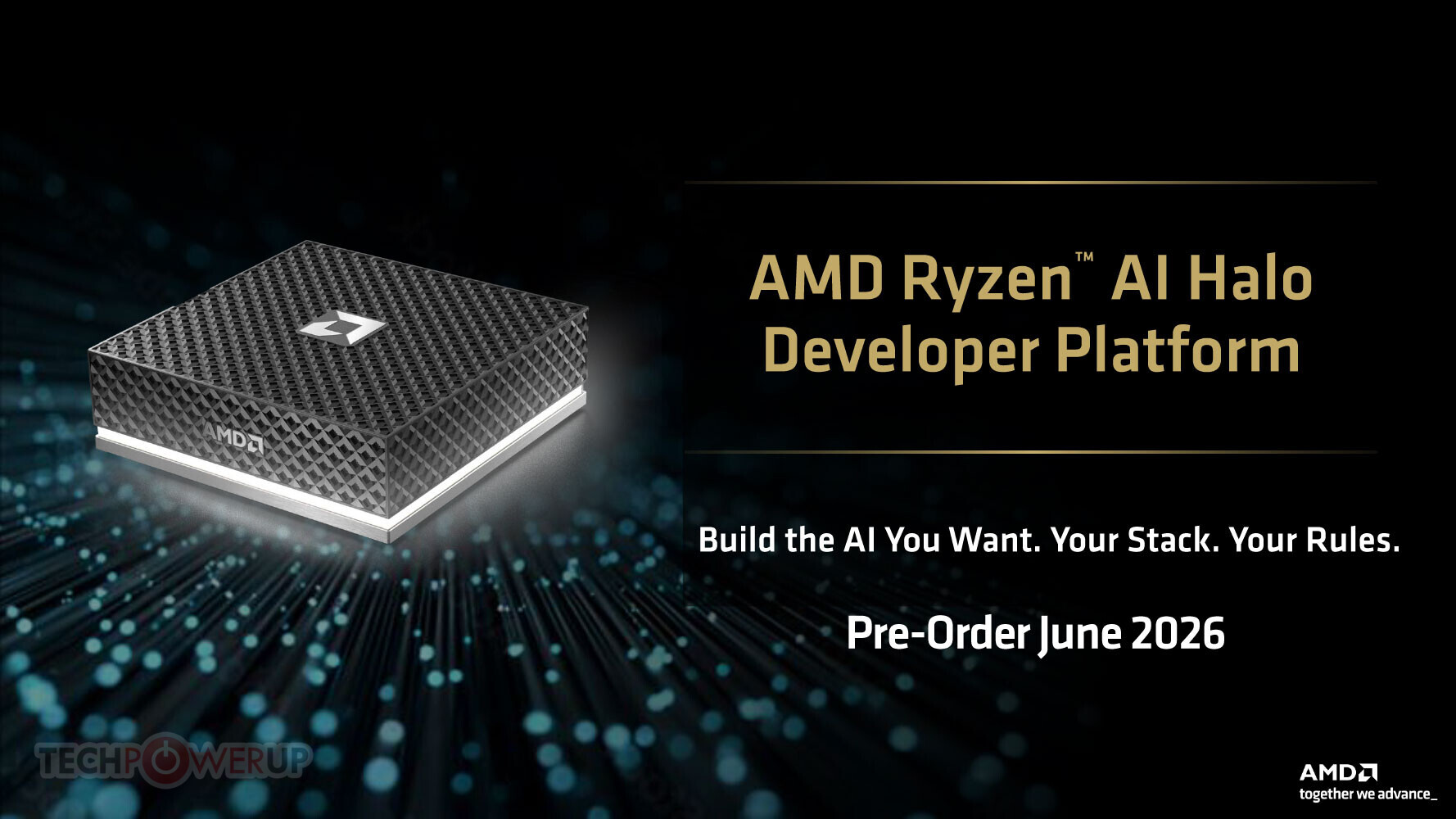
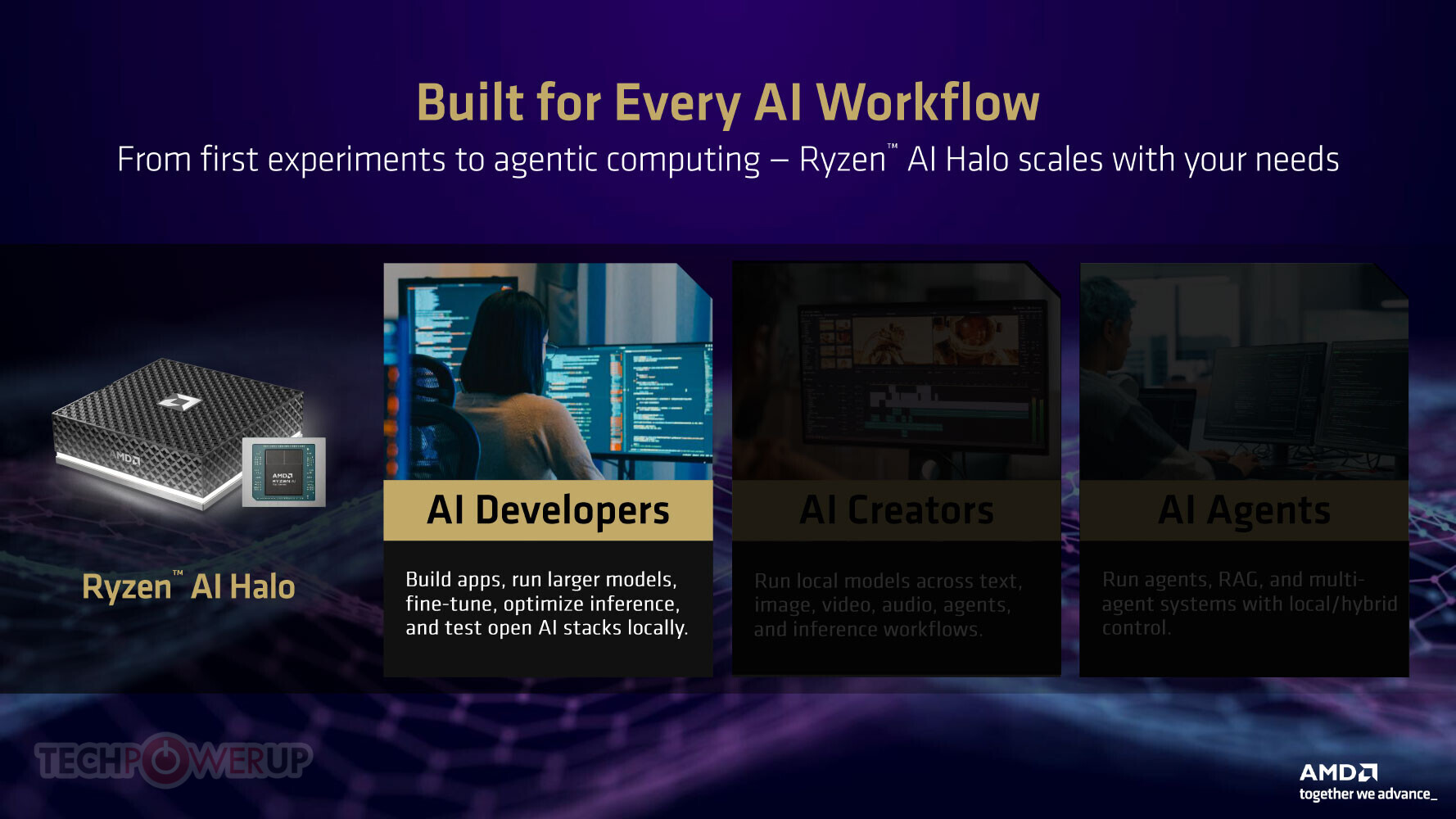
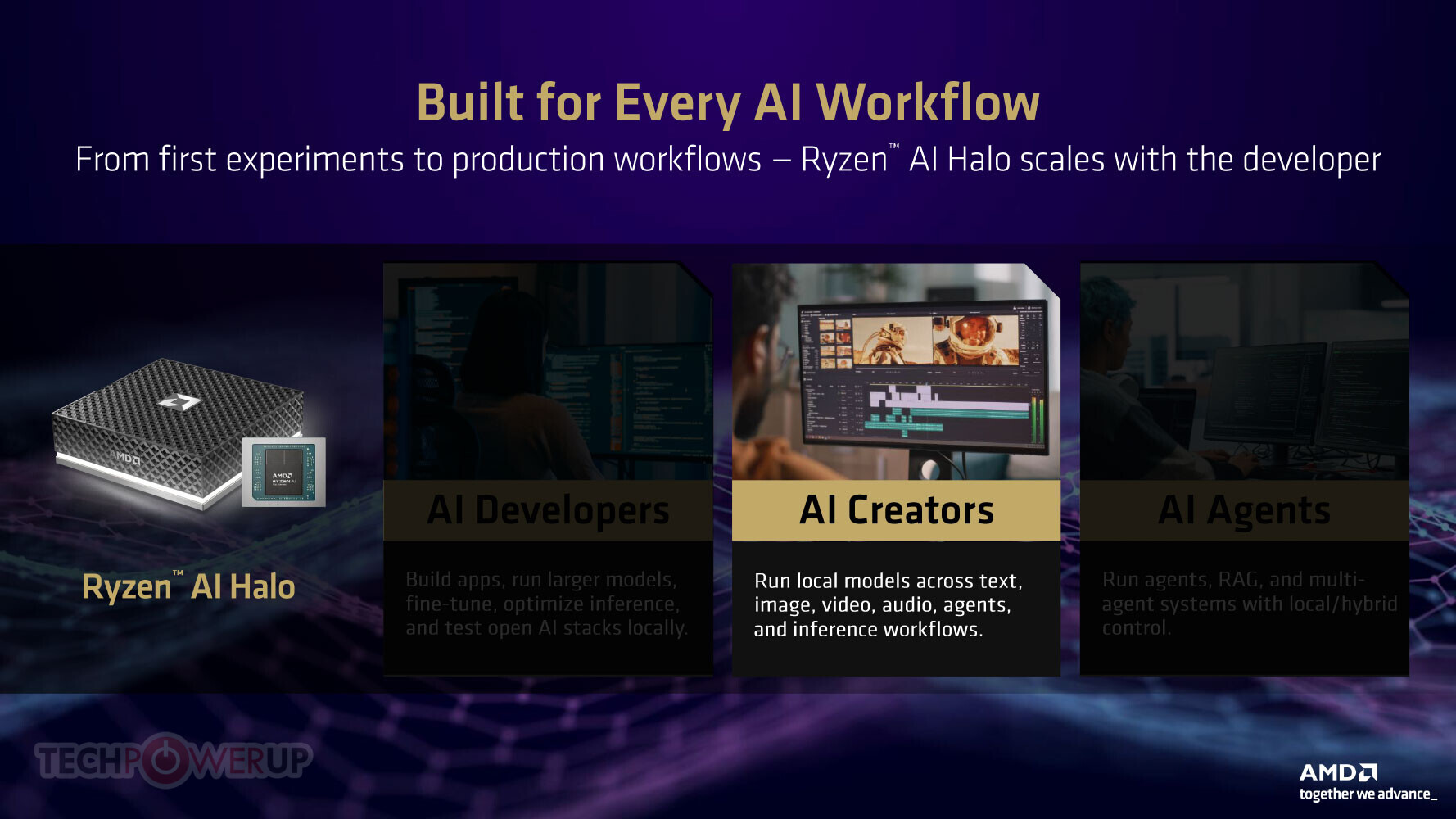
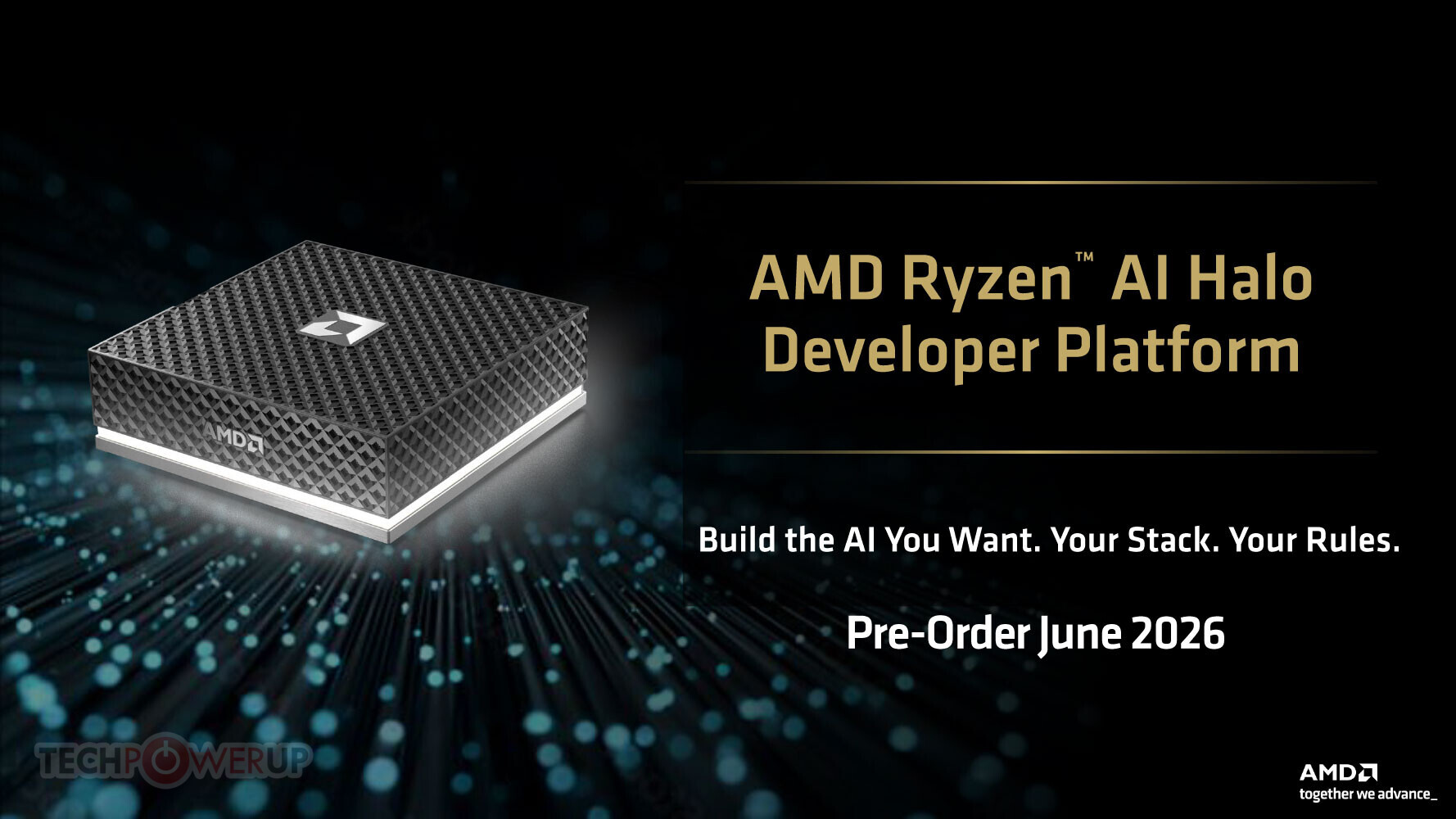
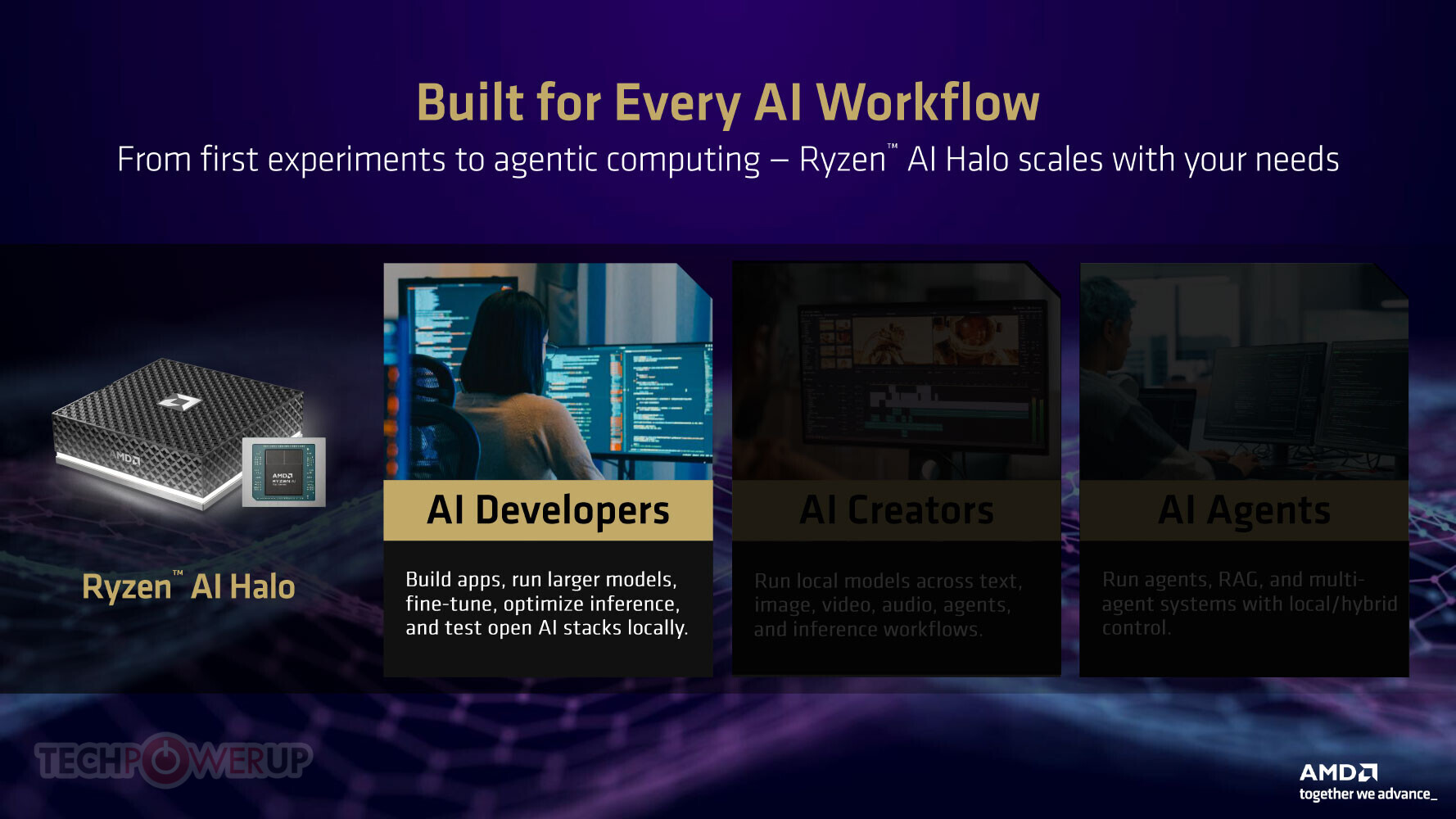
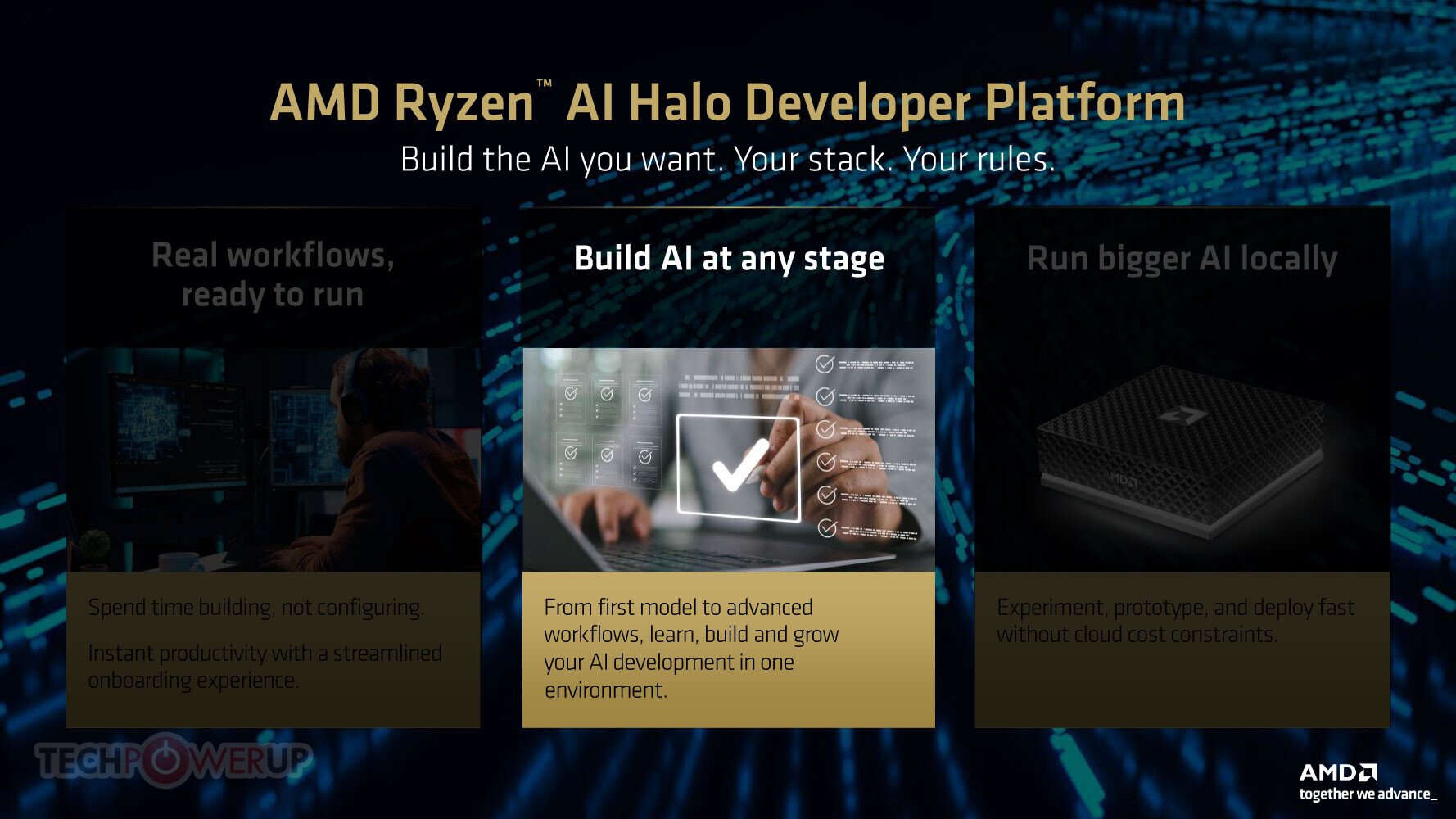
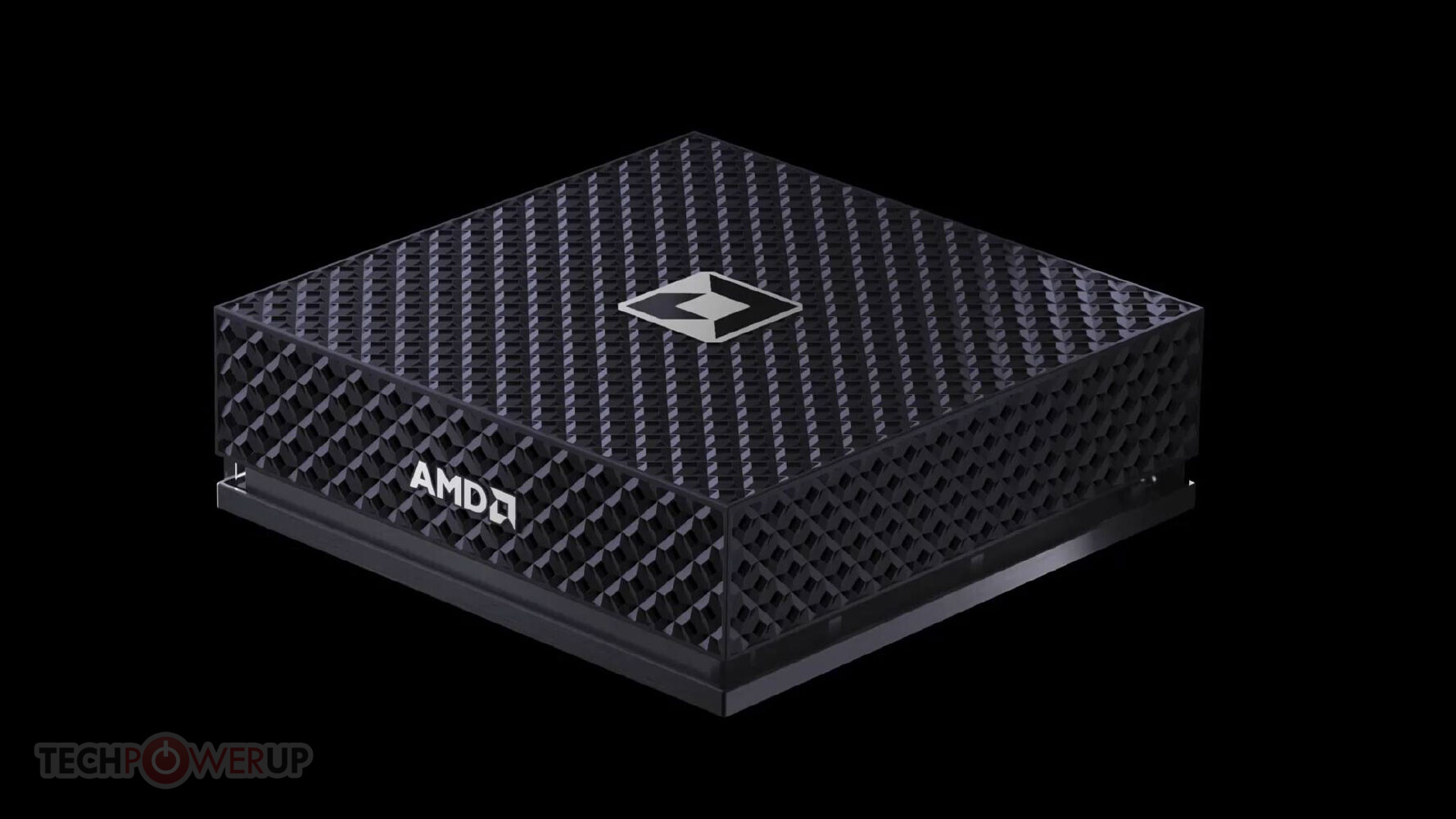
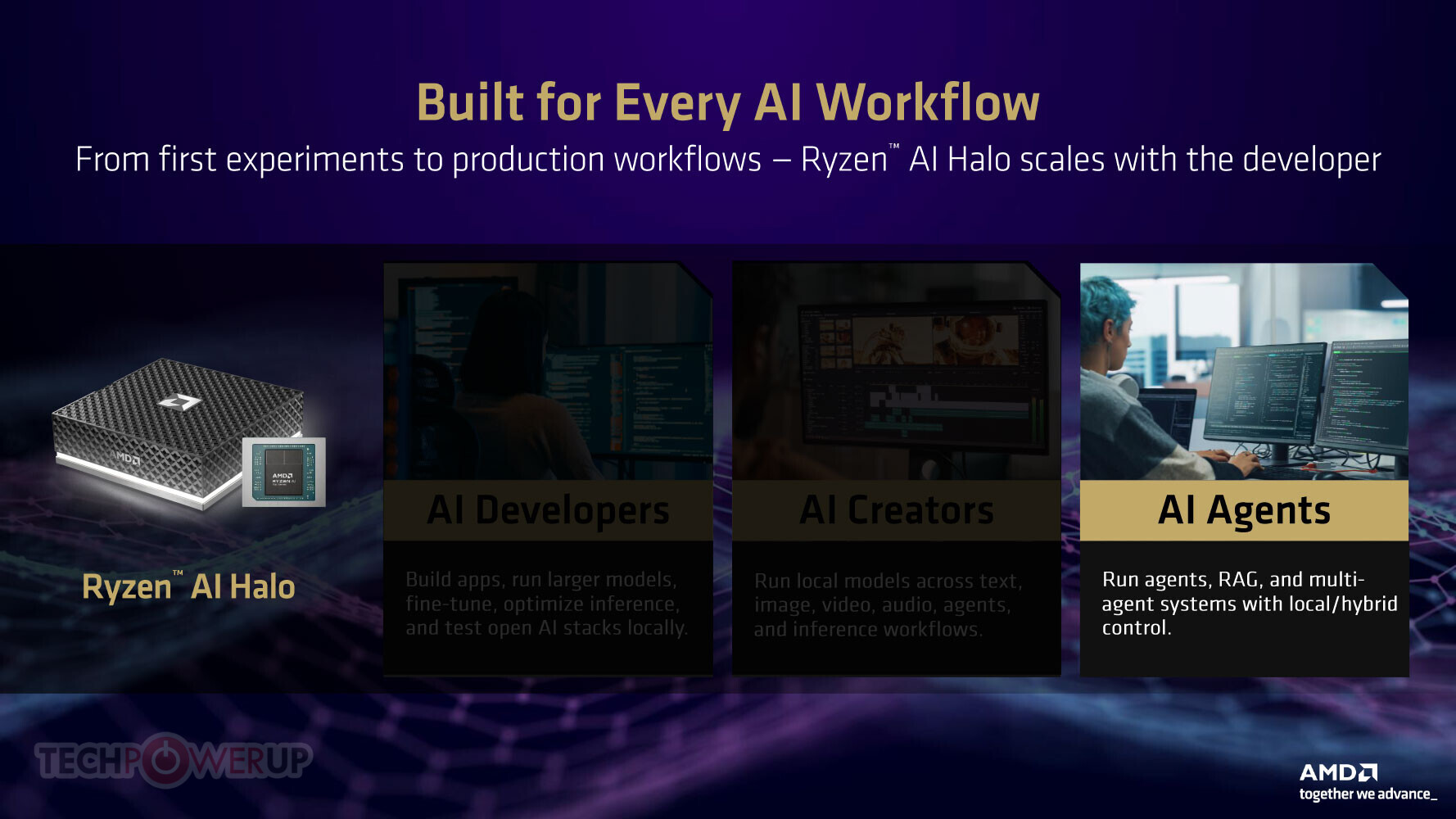
AMD has introduced the Ryzen AI Halo, a compact AI development computer engineered to deliver robust performance for AI development, inferencing, and generative AI content creation. Designed to compete directly with the Apple Mac Mini and NVIDIA DGX Spark, the Ryzen AI Halo offers a compelling blend of price, performance, and advanced capabilities. Its x86-64 architecture ensures full compatibility with Windows, setting it apart from its competitors. The Ryzen AI Halo is priced at $3,999, with pre-orders opening in June 2026.
Advanced Hardware for Demanding AI Workloads
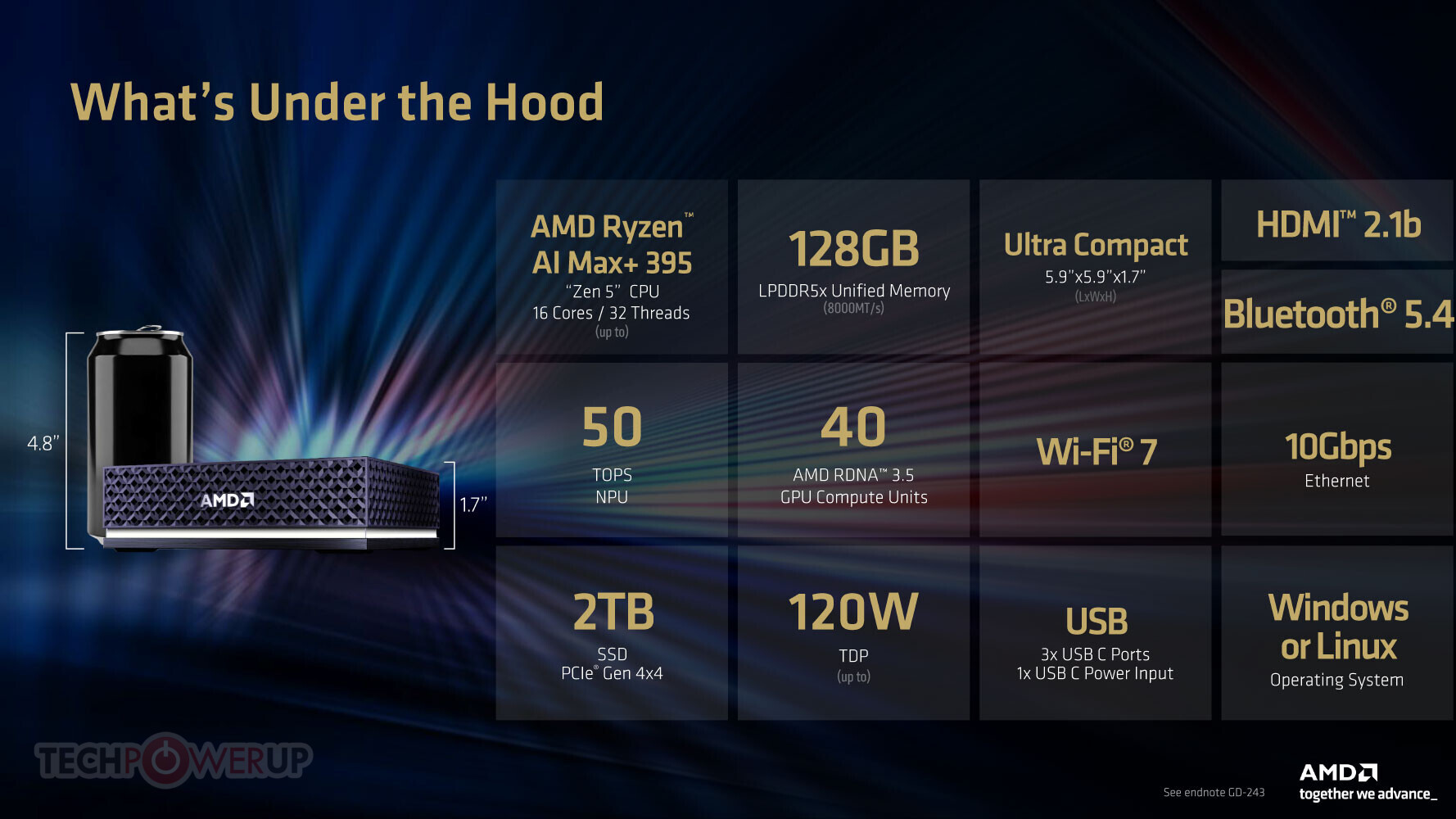
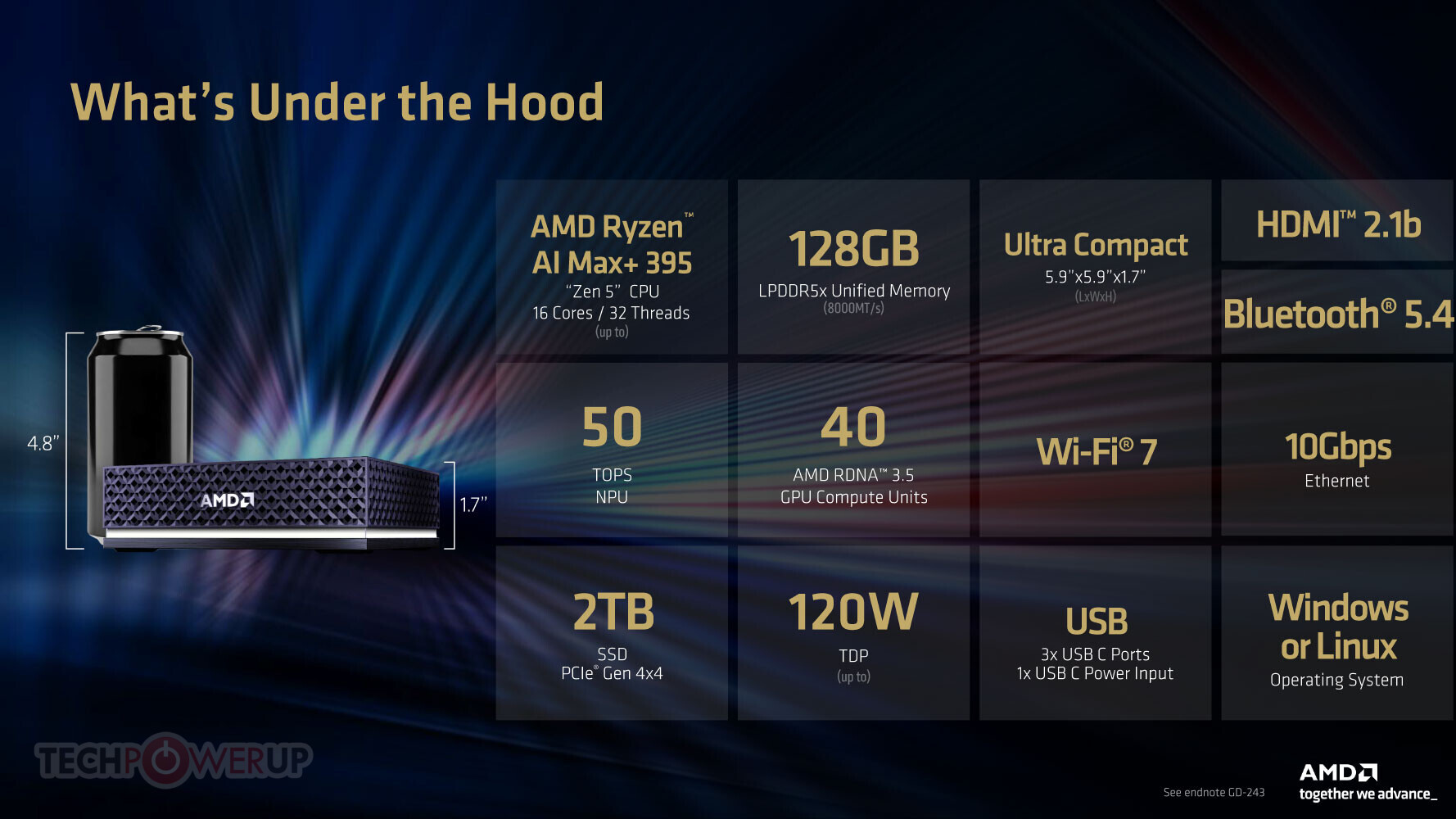
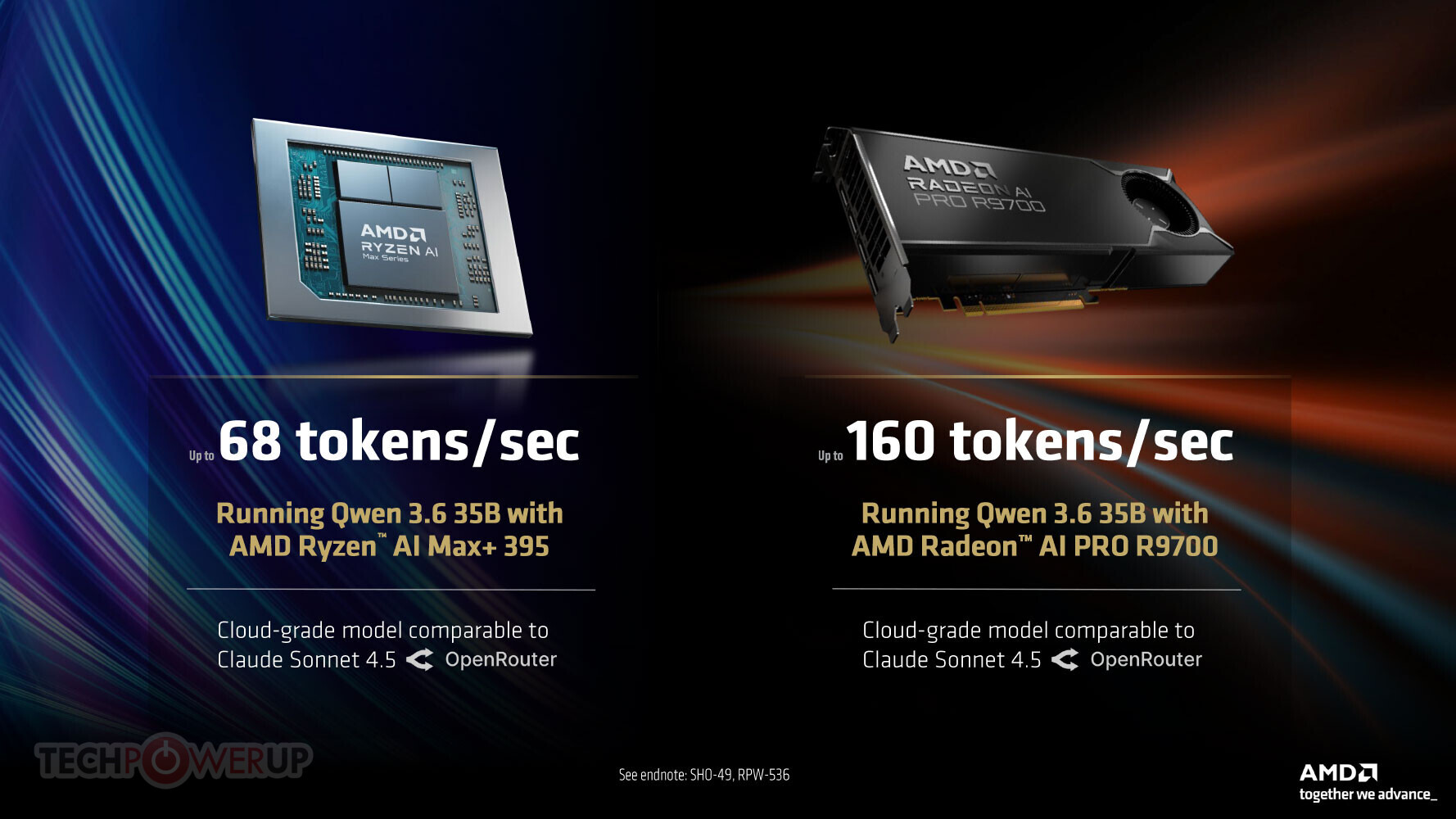
At the core of the Ryzen AI Halo is the Ryzen AI Max+ 395 "Strix Halo" processor, which integrates 16 high-performance "Zen 5" CPU cores and a powerful RDNA 3.5-based integrated GPU. This combination delivers exceptional compute capabilities, further enhanced by a 50 TOPS Neural Processing Unit (NPU) for accelerated AI tasks.
One of the standout features is the system’s memory configuration. The Ryzen AI Halo boasts a quad-channel (256-bit wide) LPDDR5x memory interface, supporting a massive 128 GB of RAM—double the maximum available on the current Mac Mini. This substantial memory capacity enables the device to run AI models with up to 200 billion parameters, provided the right quantization is used. Storage is equally impressive, with a 2 TB NVMe SSD ensuring fast data access and ample space for large datasets.
Comprehensive Software Ecosystem
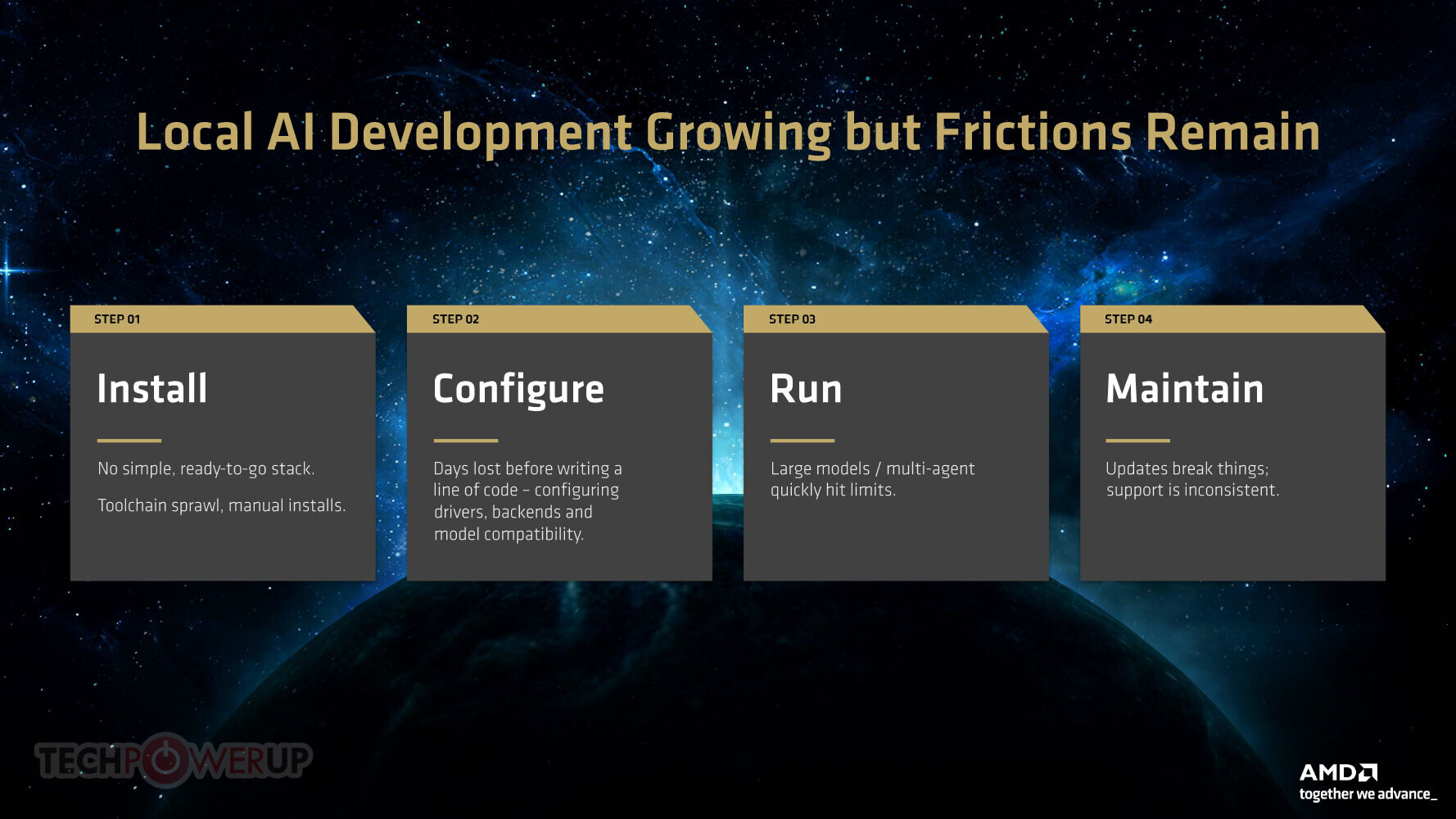
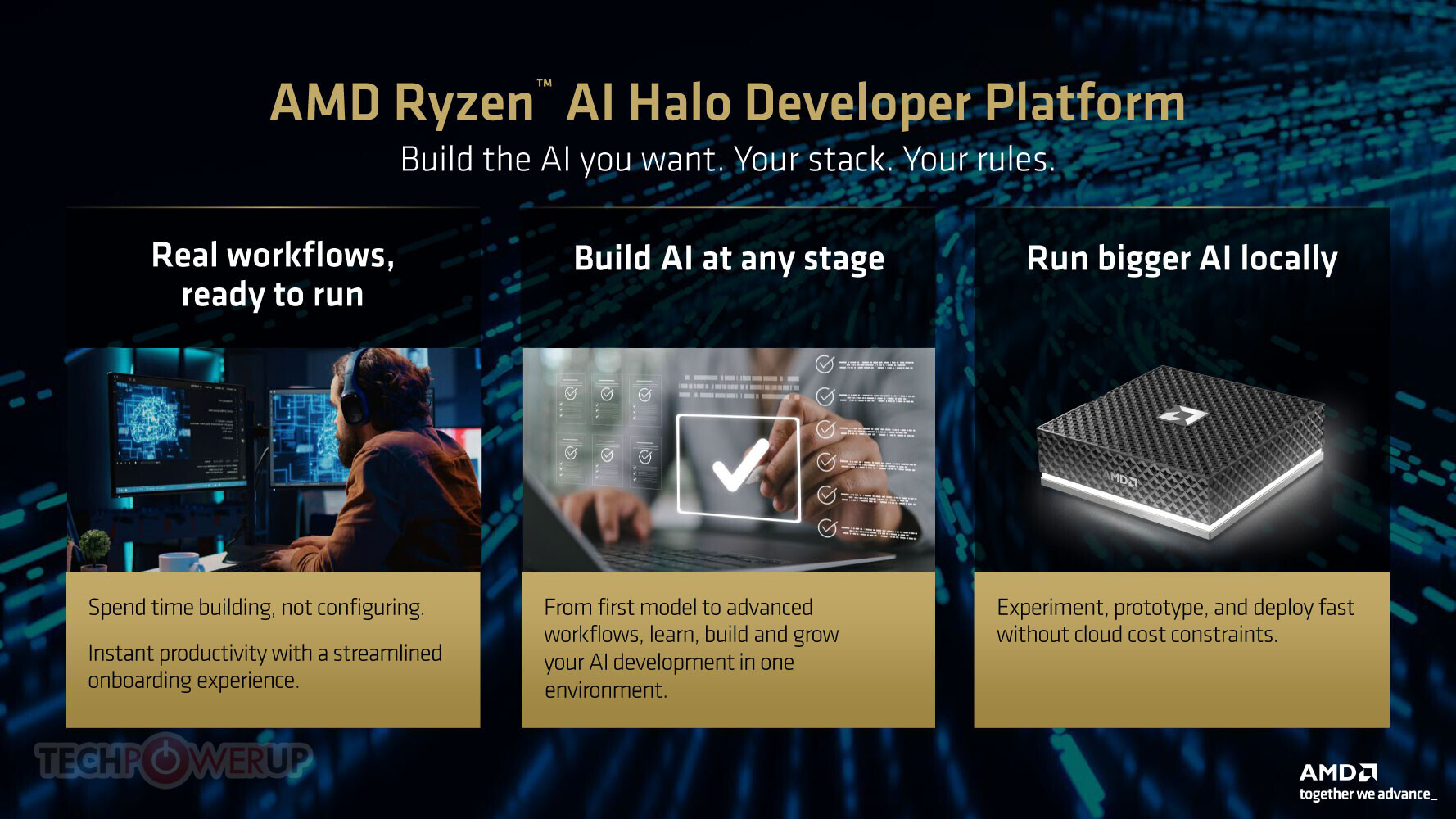
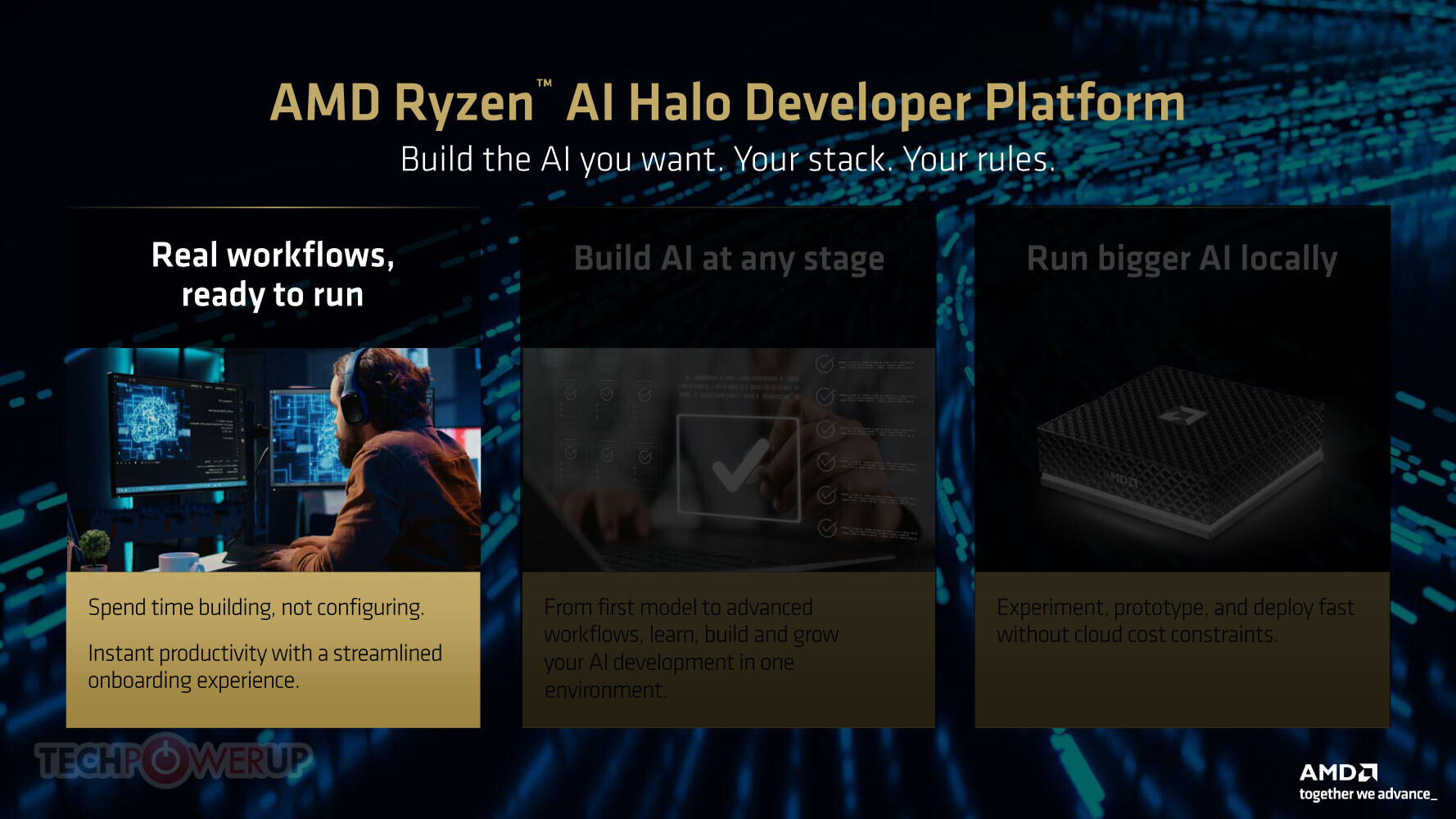
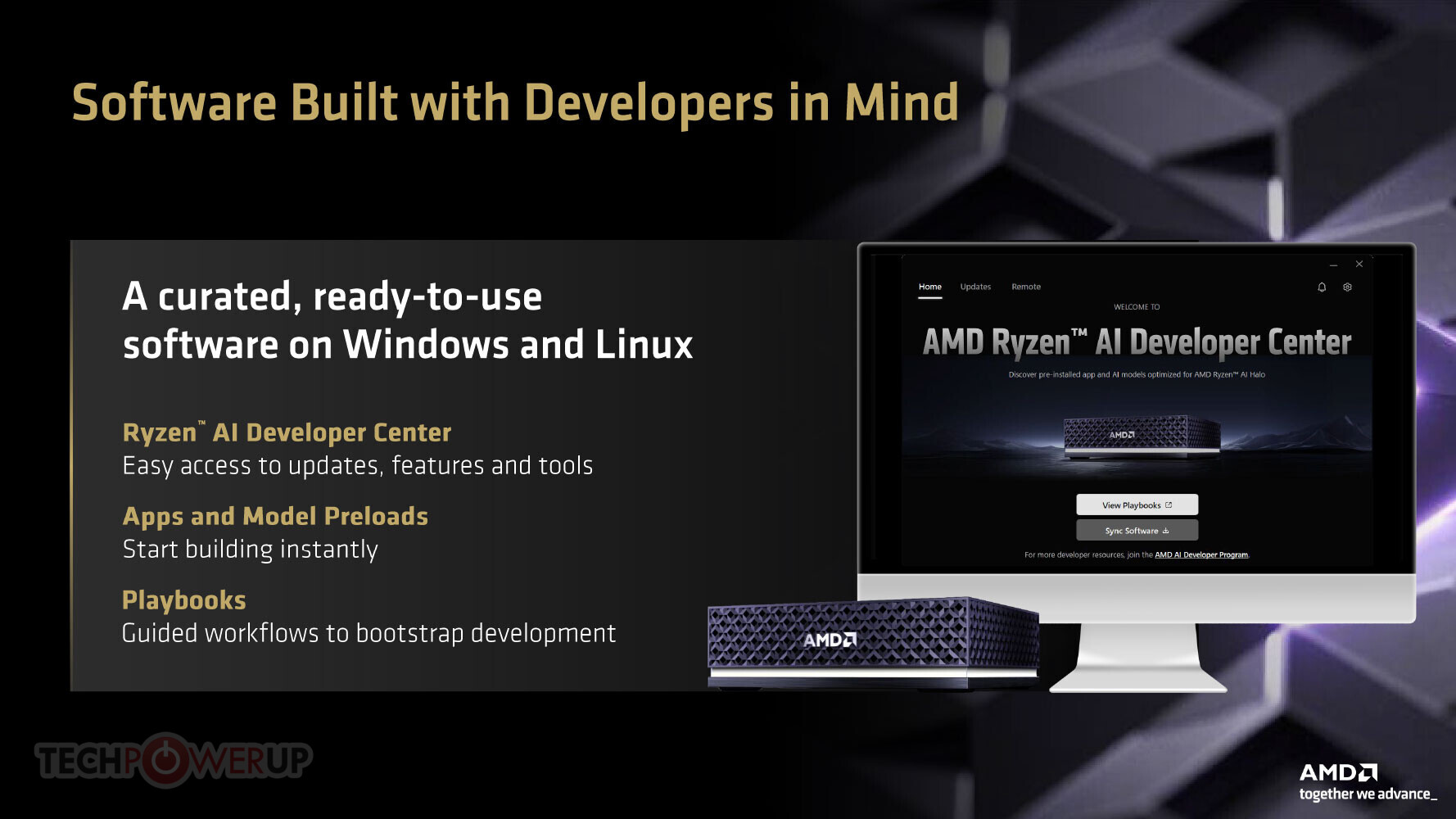
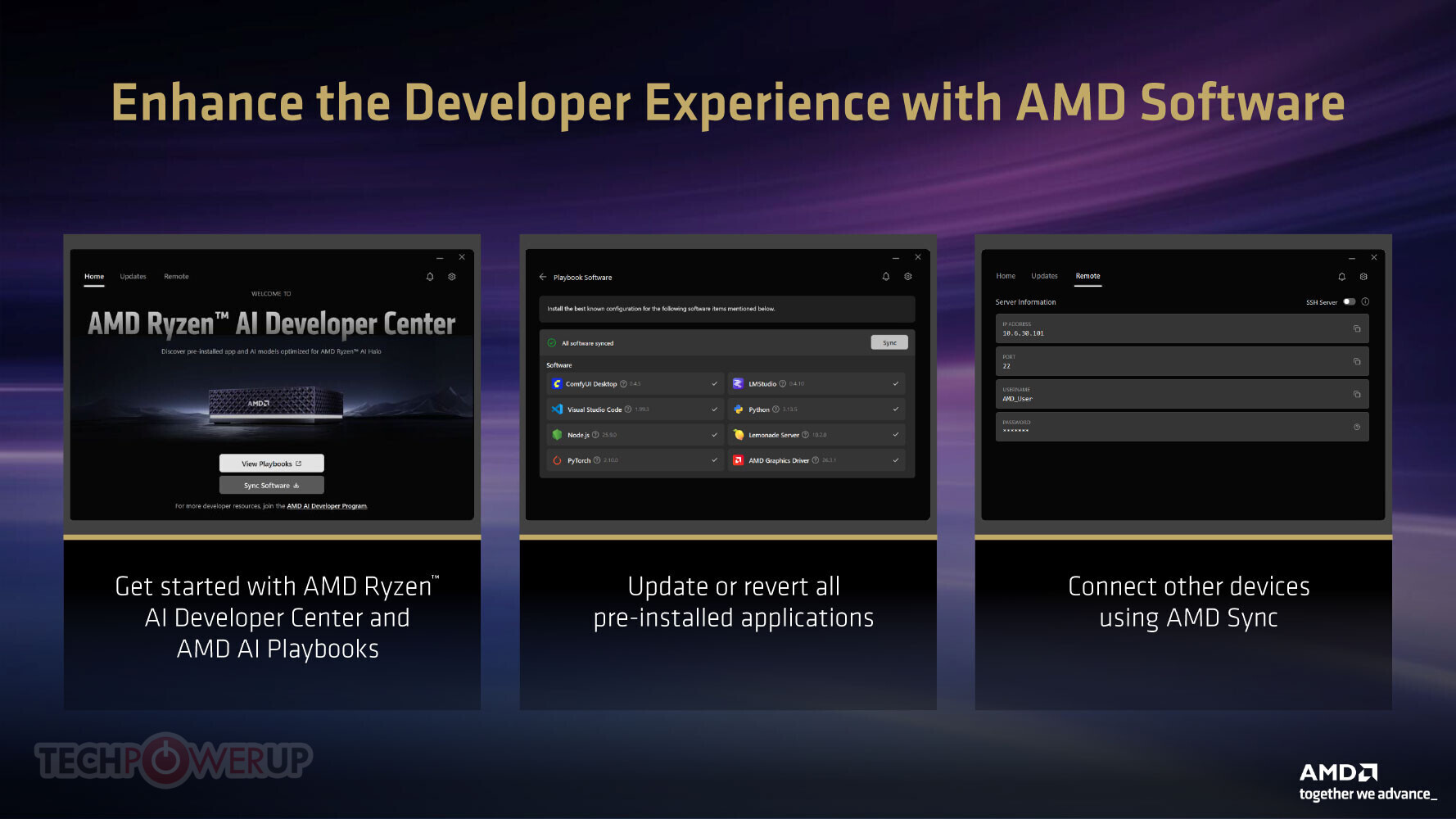
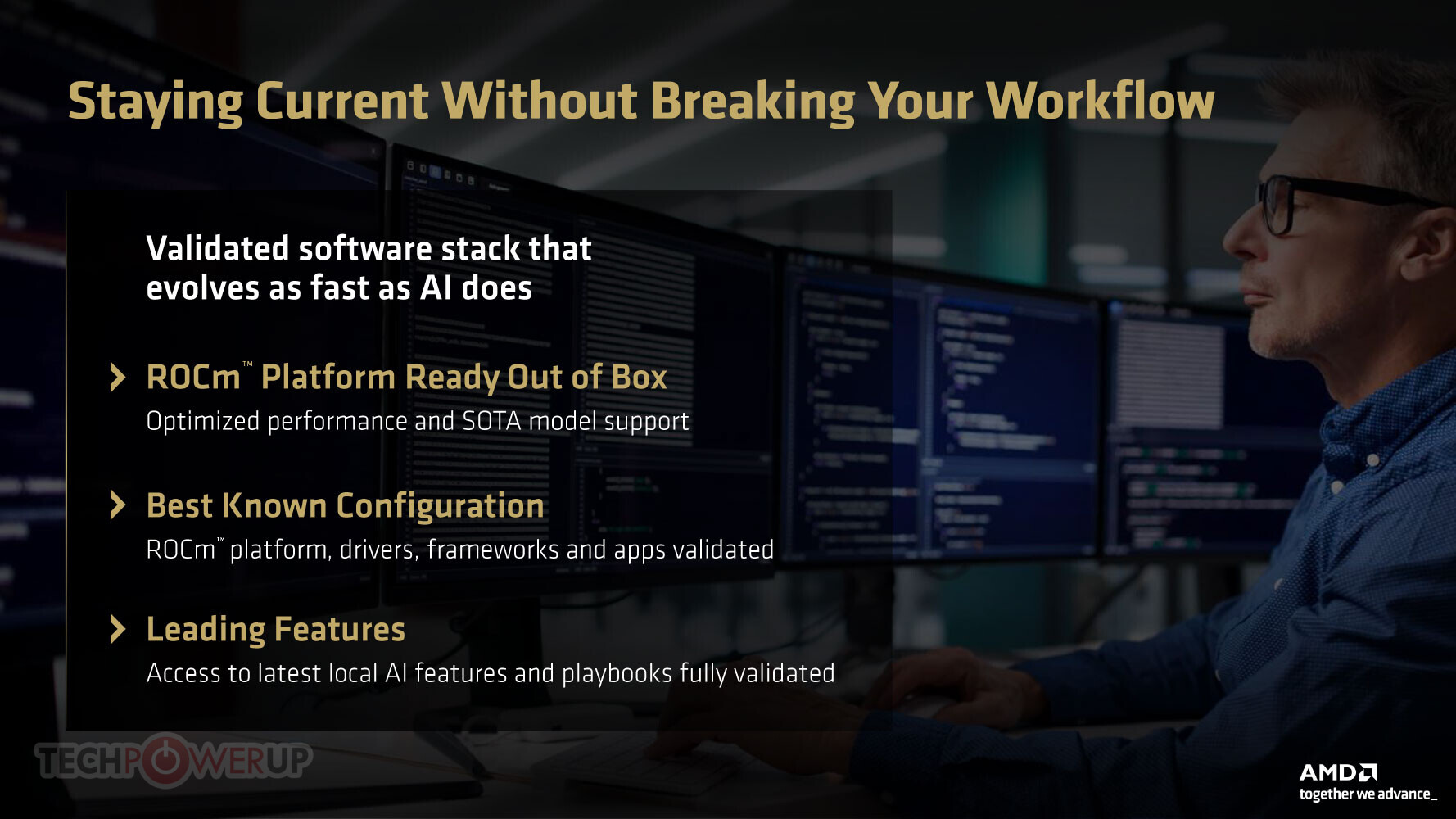
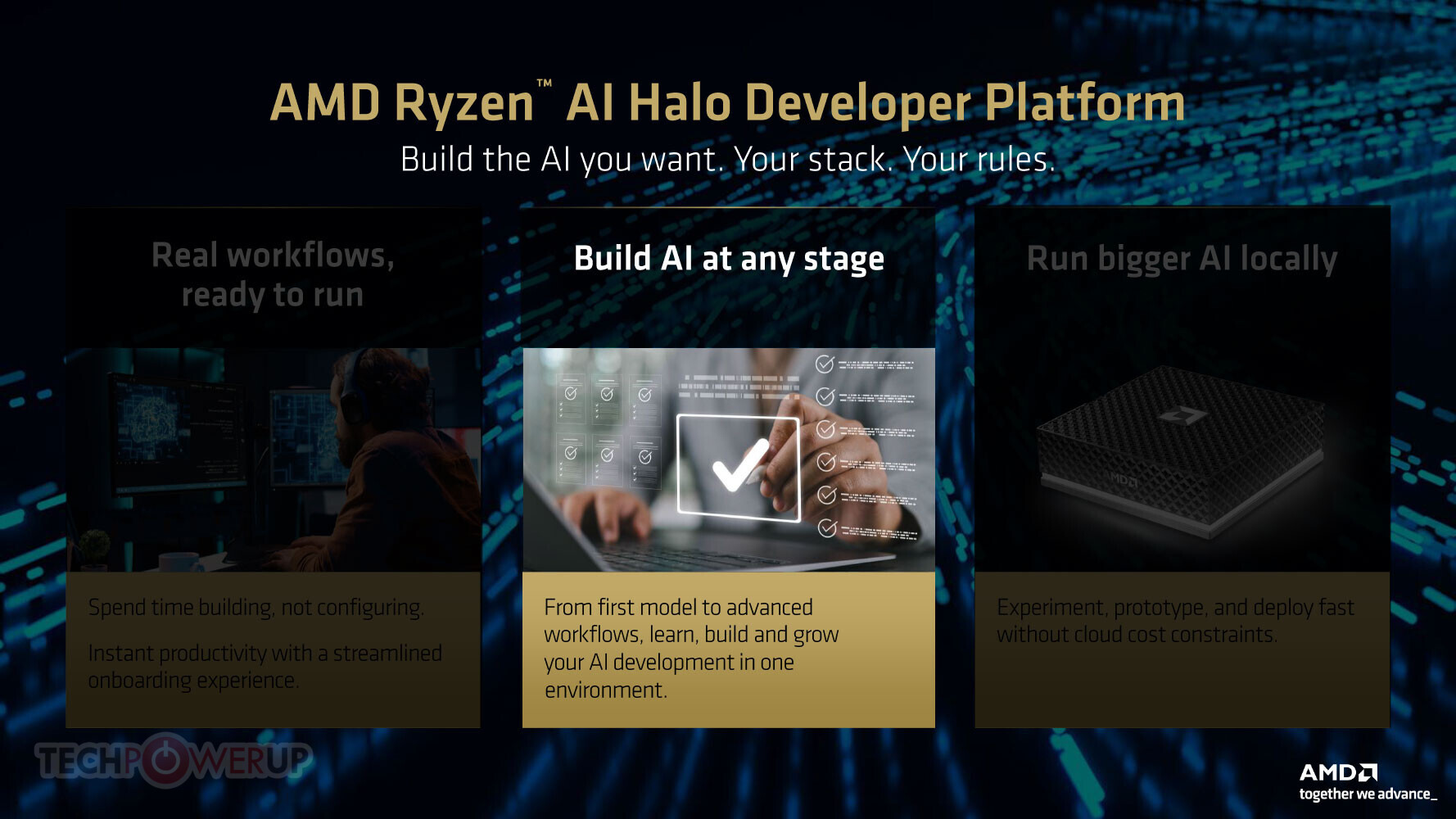
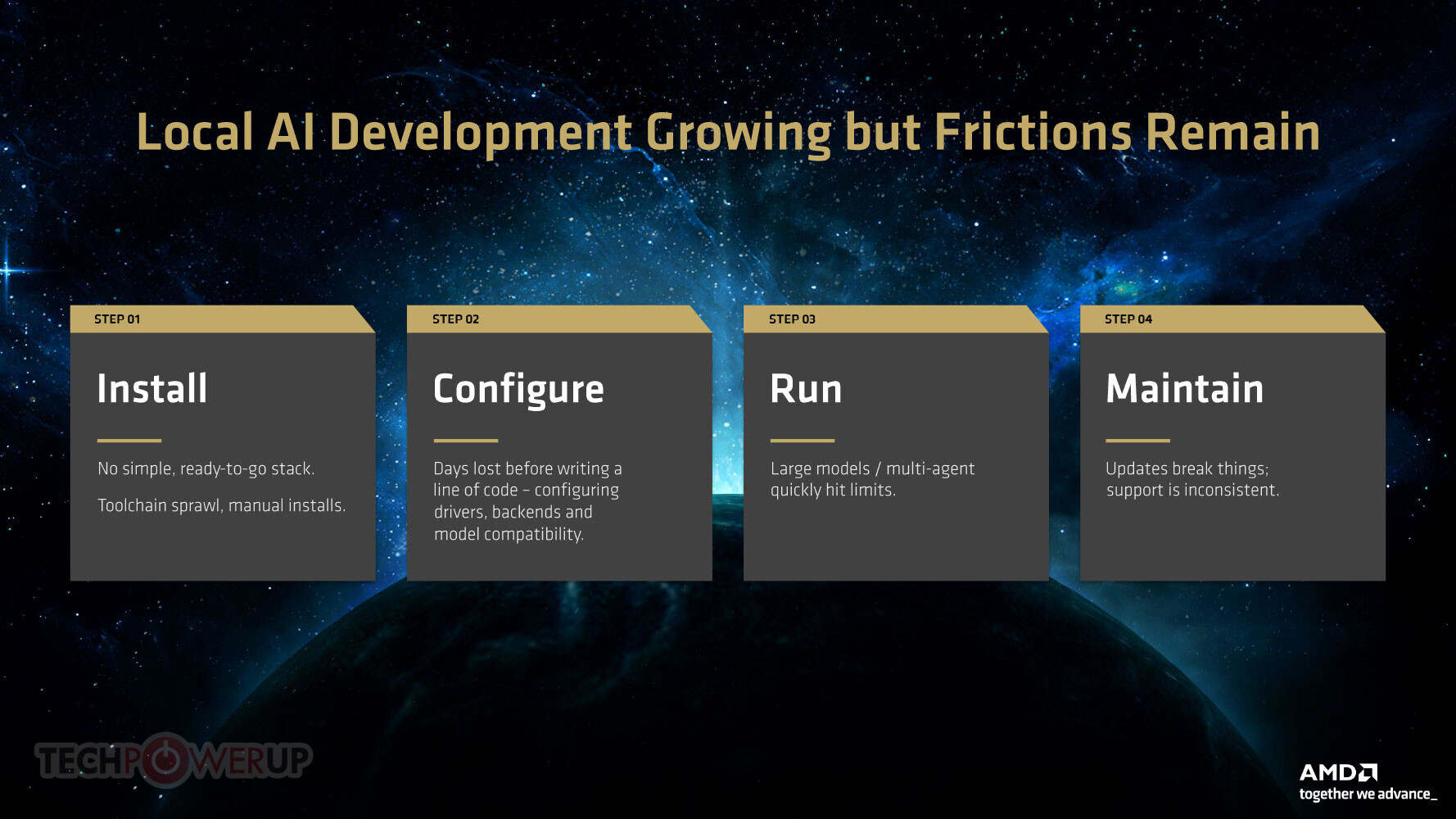
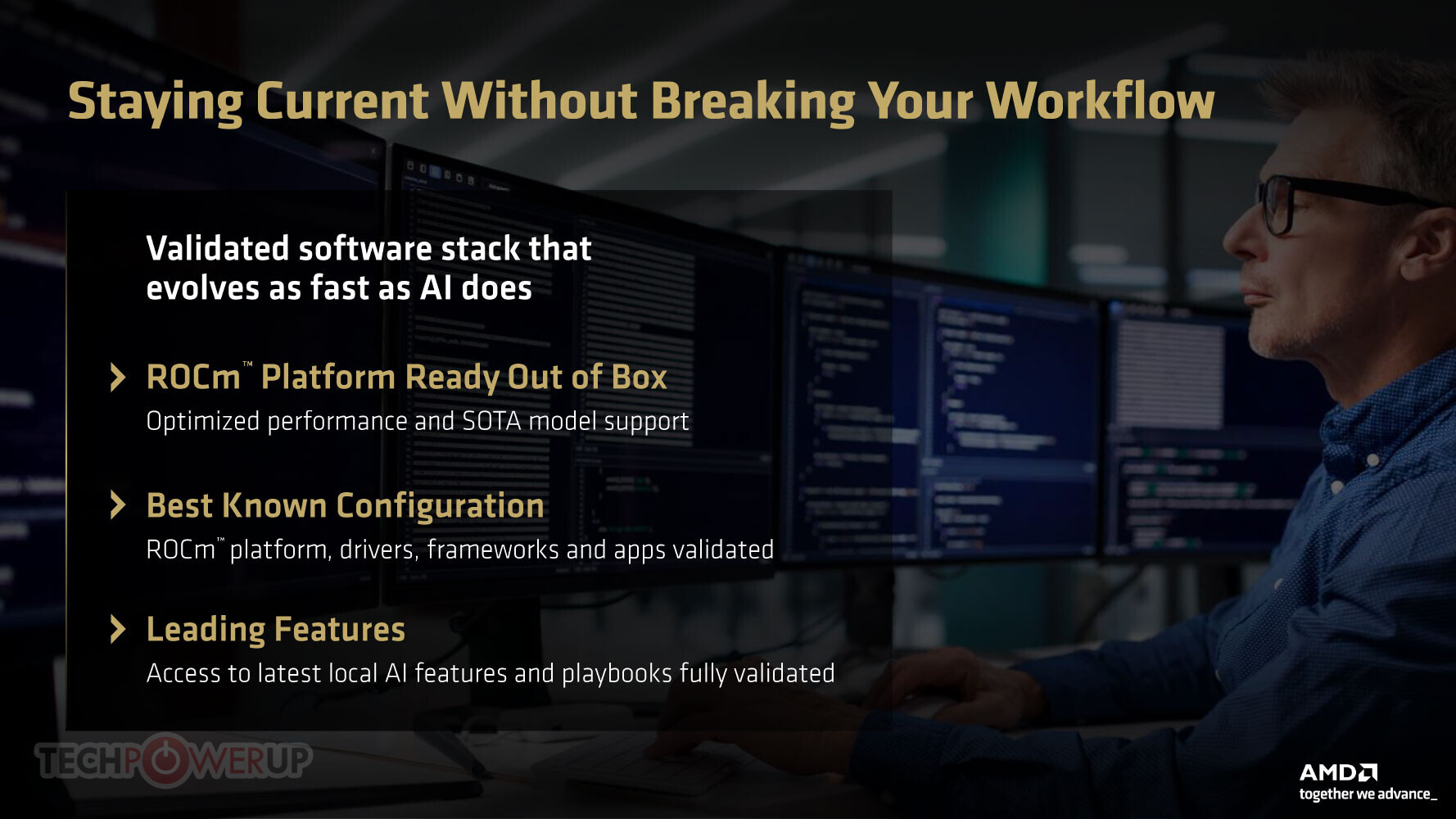
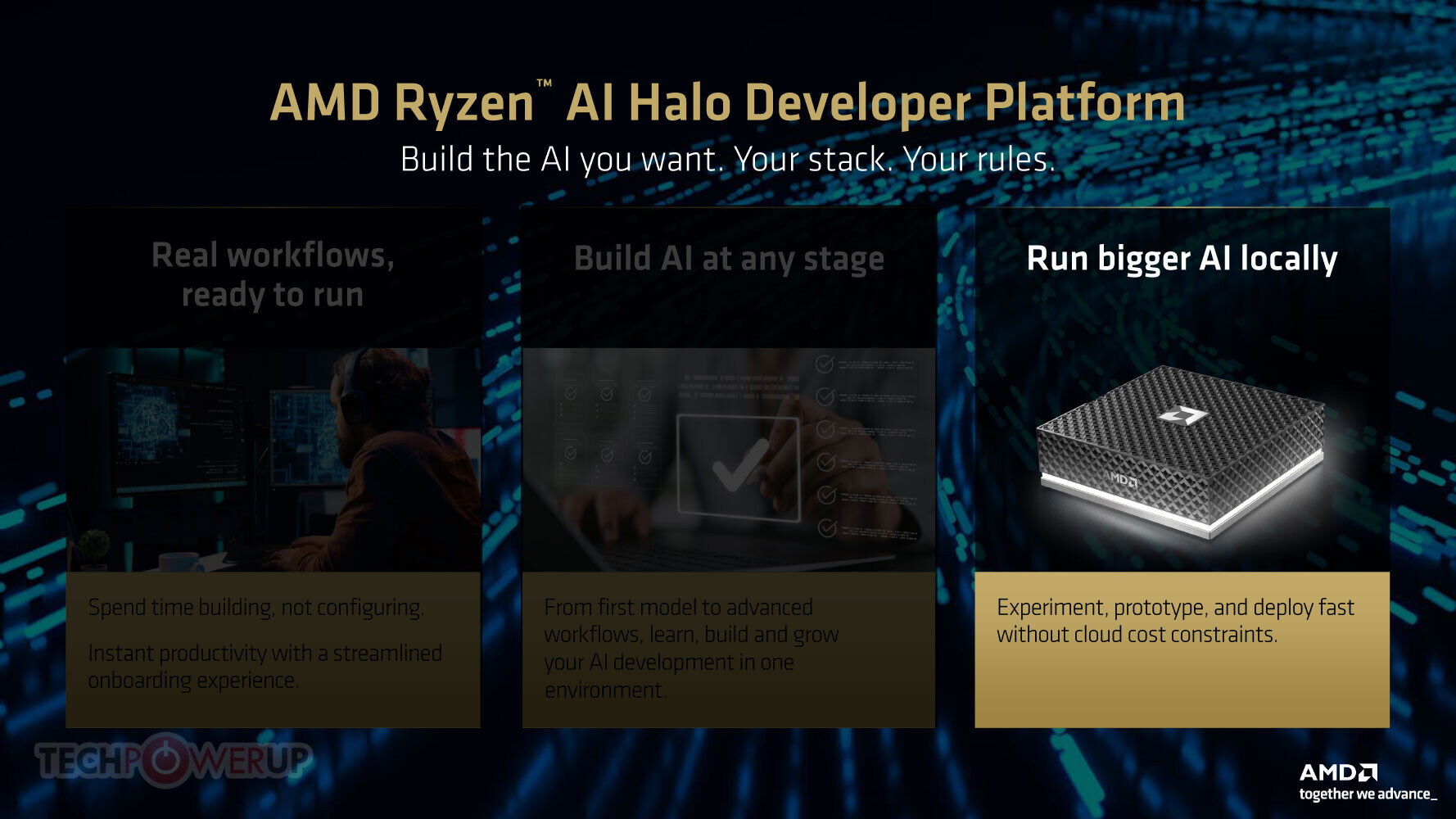
AMD has invested heavily in the software side of the Ryzen AI Halo, developing a robust platform that supports both Windows and Linux environments. This software suite is designed to streamline deployment, making it faster and easier for developers to set up and scale multiple Ryzen AI Halo units compared to alternatives like the DGX Spark.
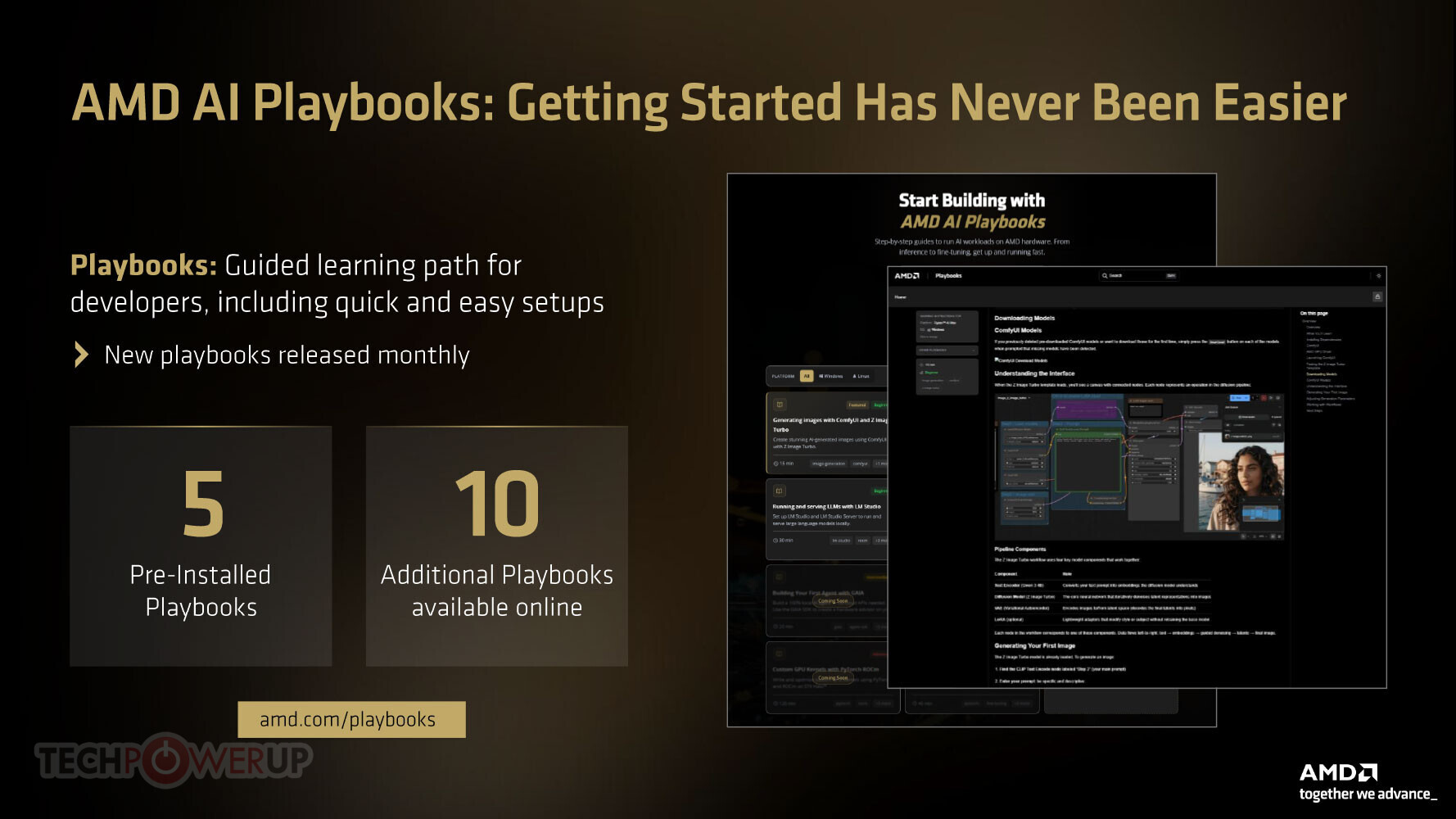
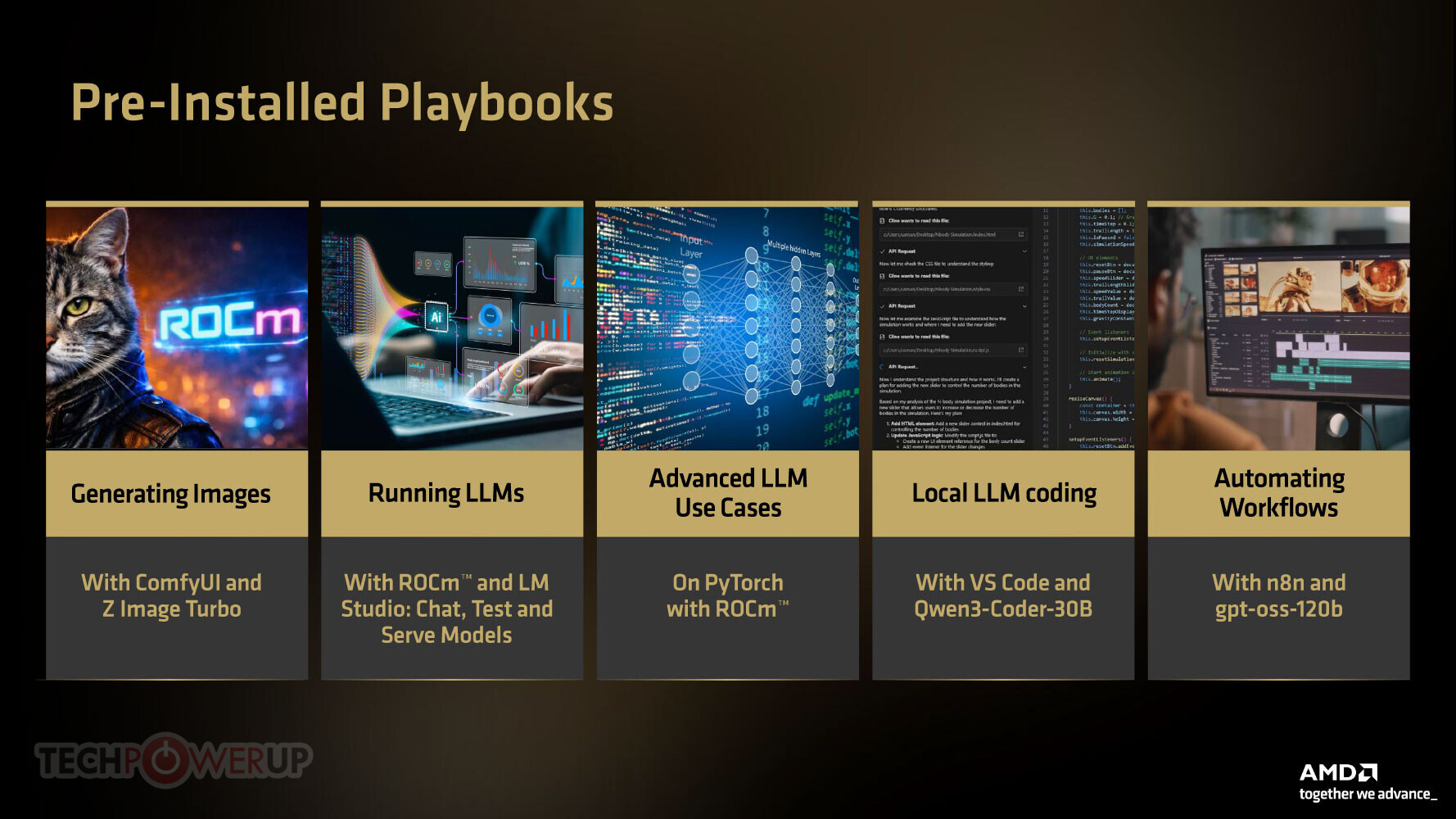
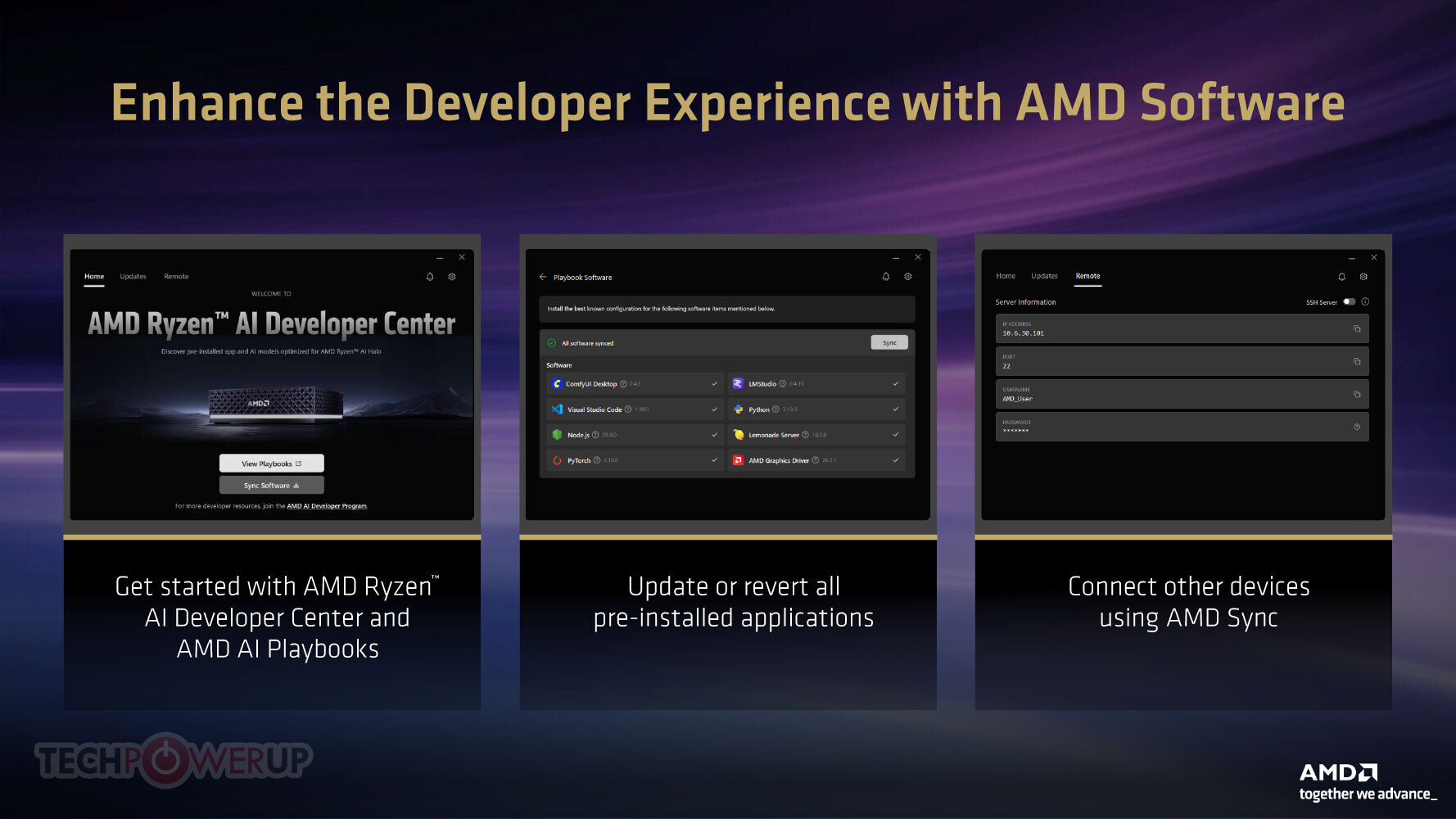
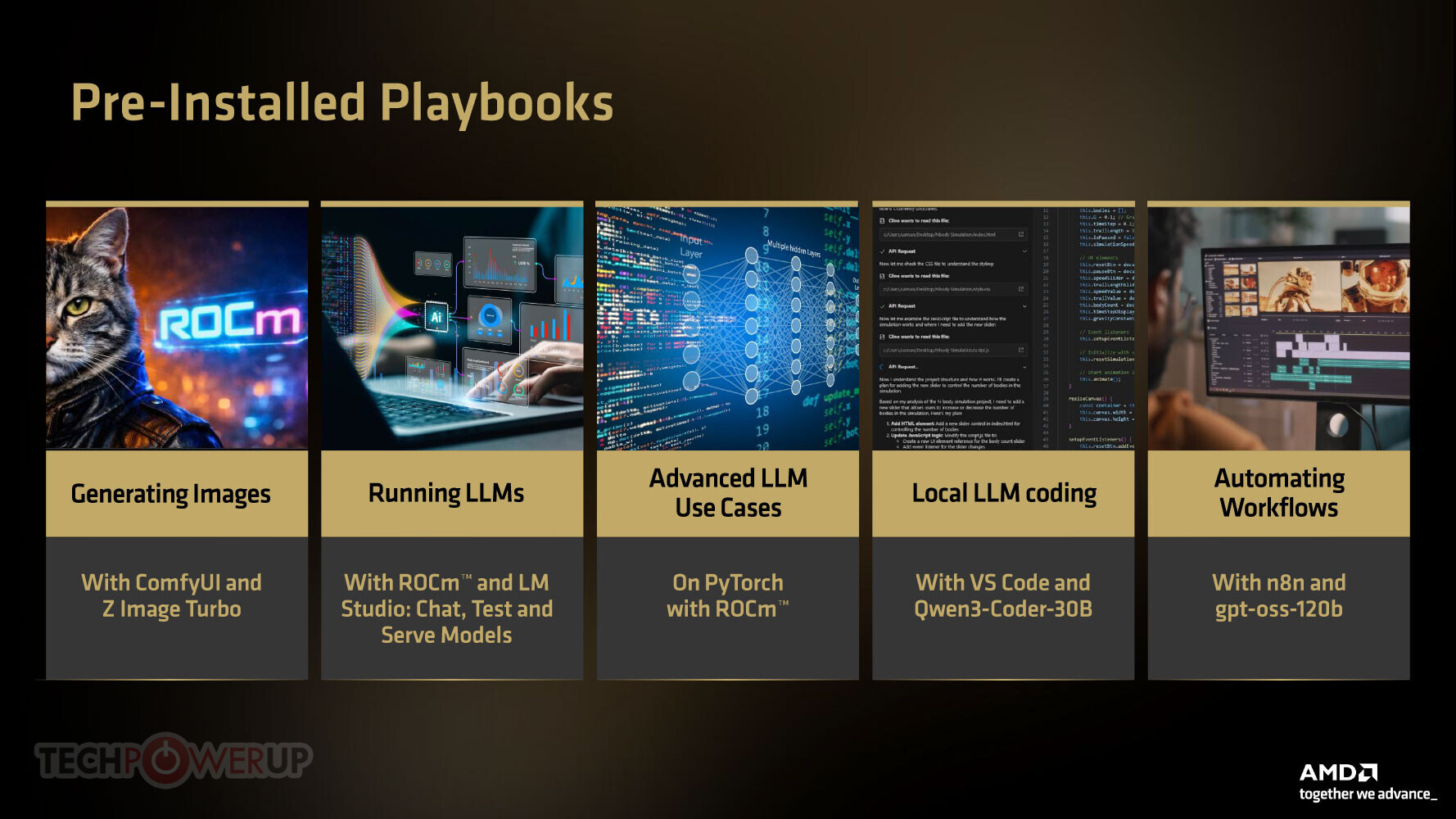
The AMD Ryzen AI Development Center serves as a unified interface for configuring and deploying AI tools, minimizing setup time and allowing developers to focus on building and running their models. Complementing this is AMD AI Playbooks—a curated collection of documentation and scripts that help users quickly get up to speed on the platform. These Playbooks cover a range of use cases, including image generation with ComfyUI and Z Image Turbo, running large language models (LLMs) with ROCm, advanced LLM workflows in PyTorch, local LLM-assisted software development with VS Code and Qwen3-Coder-30B, and workflow automation using n8n and GPT-OSS-120B models. Five Playbooks come pre-installed, with an additional ten available online, and AMD plans to release new Playbooks monthly.
Developer Support and Community Resources
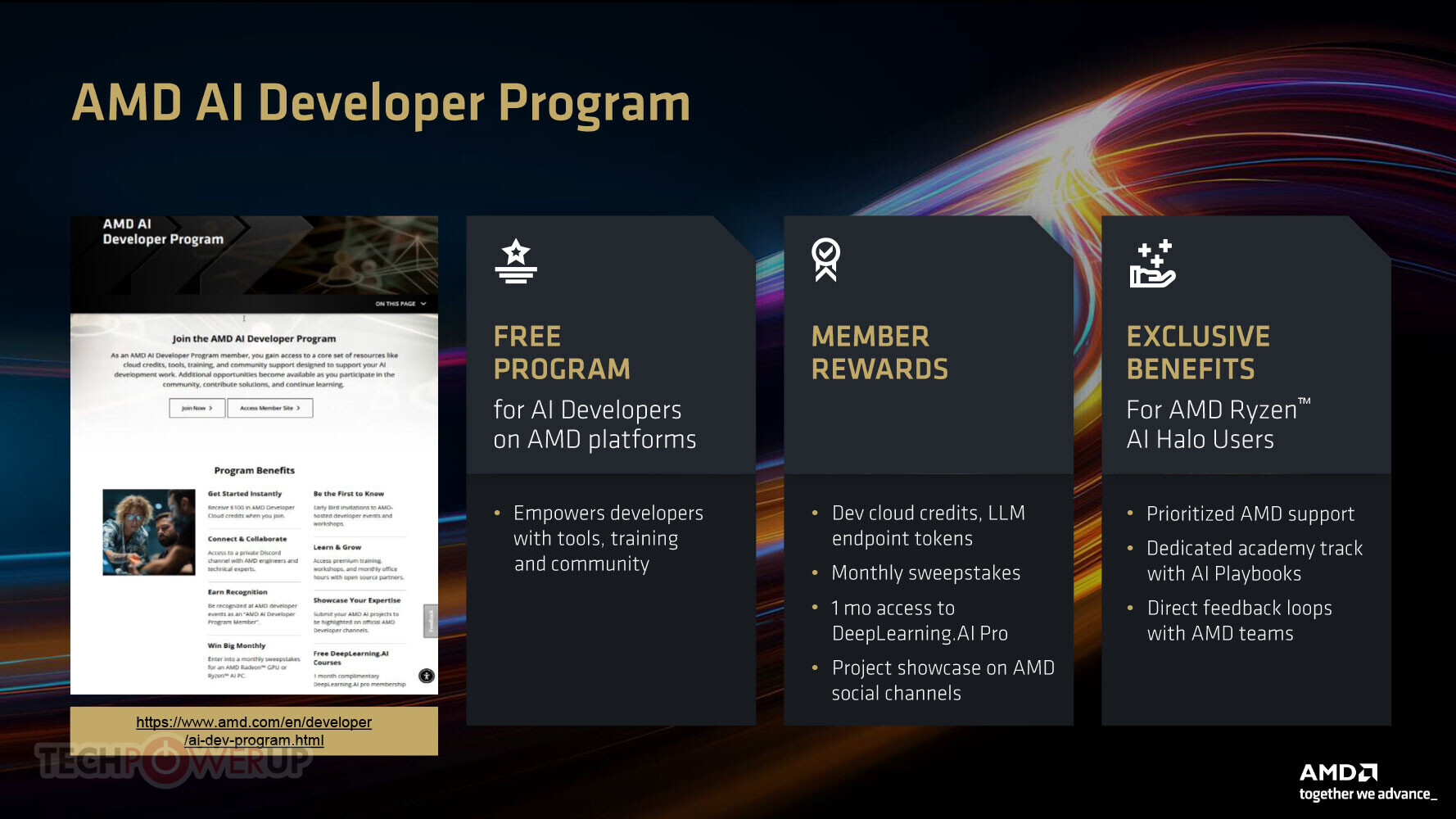
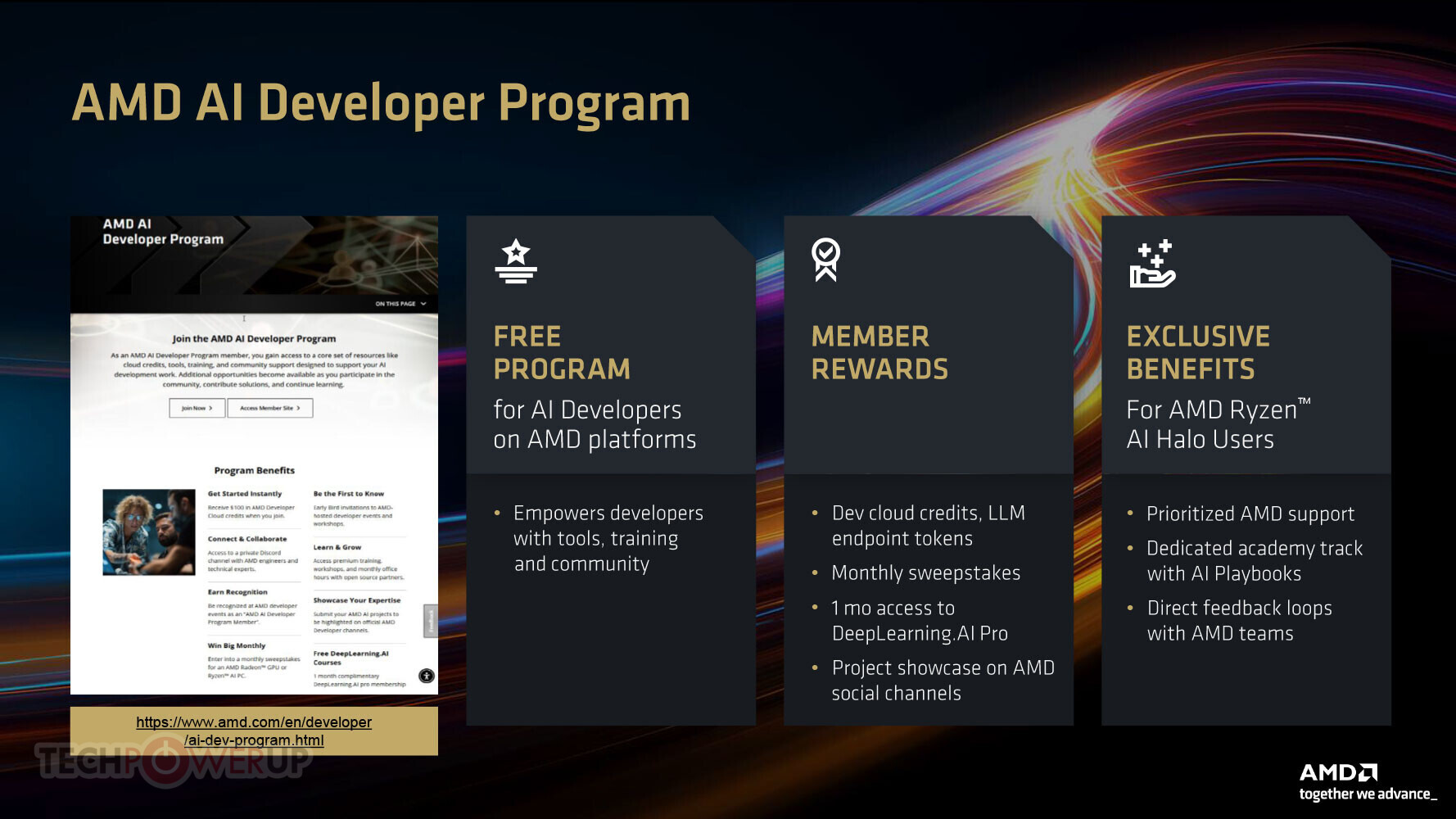
The AMD AI Developer Program is a free initiative aimed at empowering developers working on AMD platforms. Members receive 100 AMD Developer Cloud credits and a complimentary one-month DeepLearning.AI Pro membership. The program also offers access to a private Discord channel for direct interaction with AMD technical experts, monthly sweepstakes for AMD hardware, exclusive workshops, and opportunities to showcase projects on official AMD channels. Ryzen AI Halo users benefit from exclusive tier perks, including prioritized support, direct feedback channels with AMD teams, and a dedicated academy track featuring AI Playbooks.
Performance Benchmarks: Ryzen AI Halo vs. DGX Spark and Mac Mini
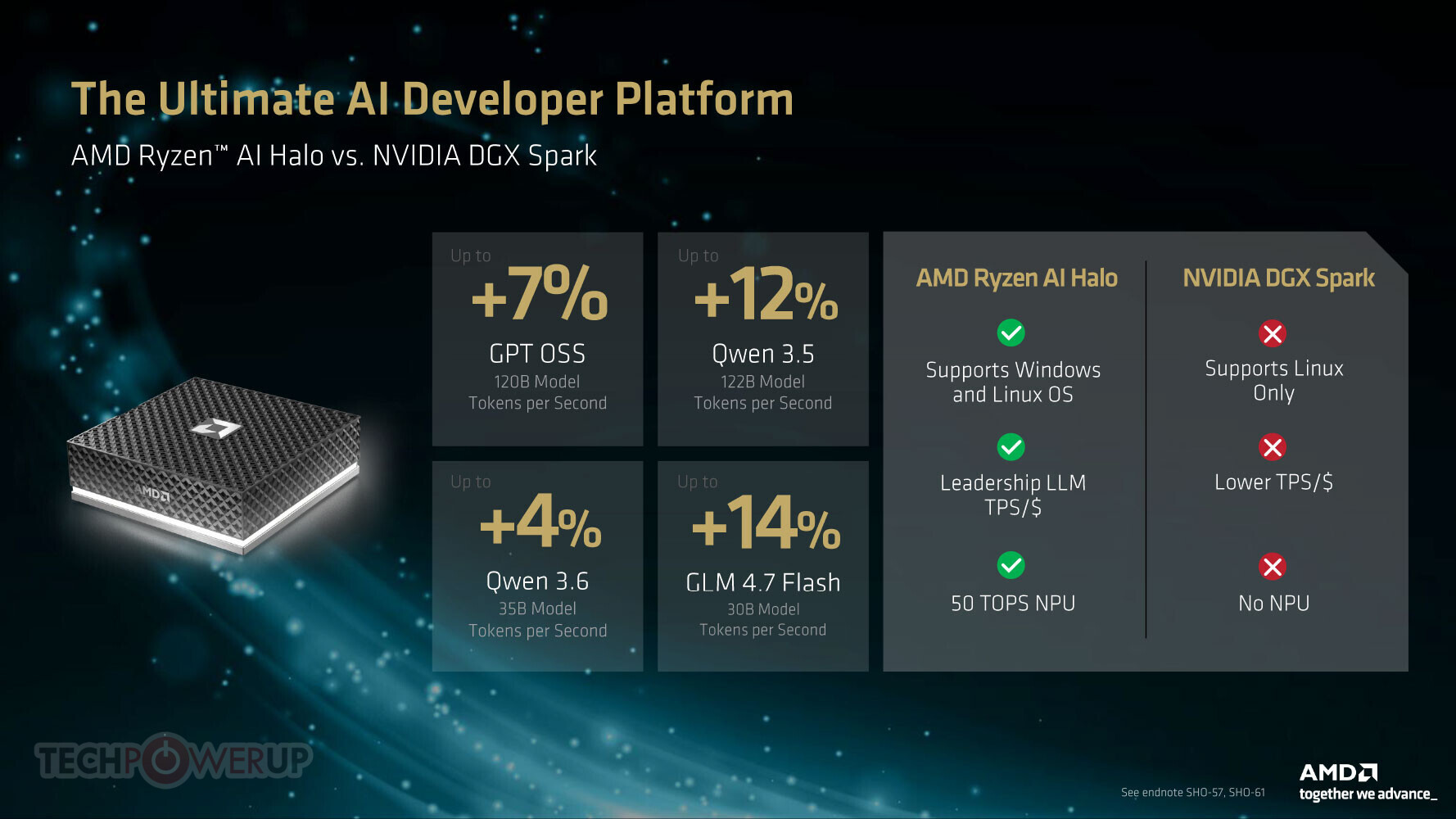
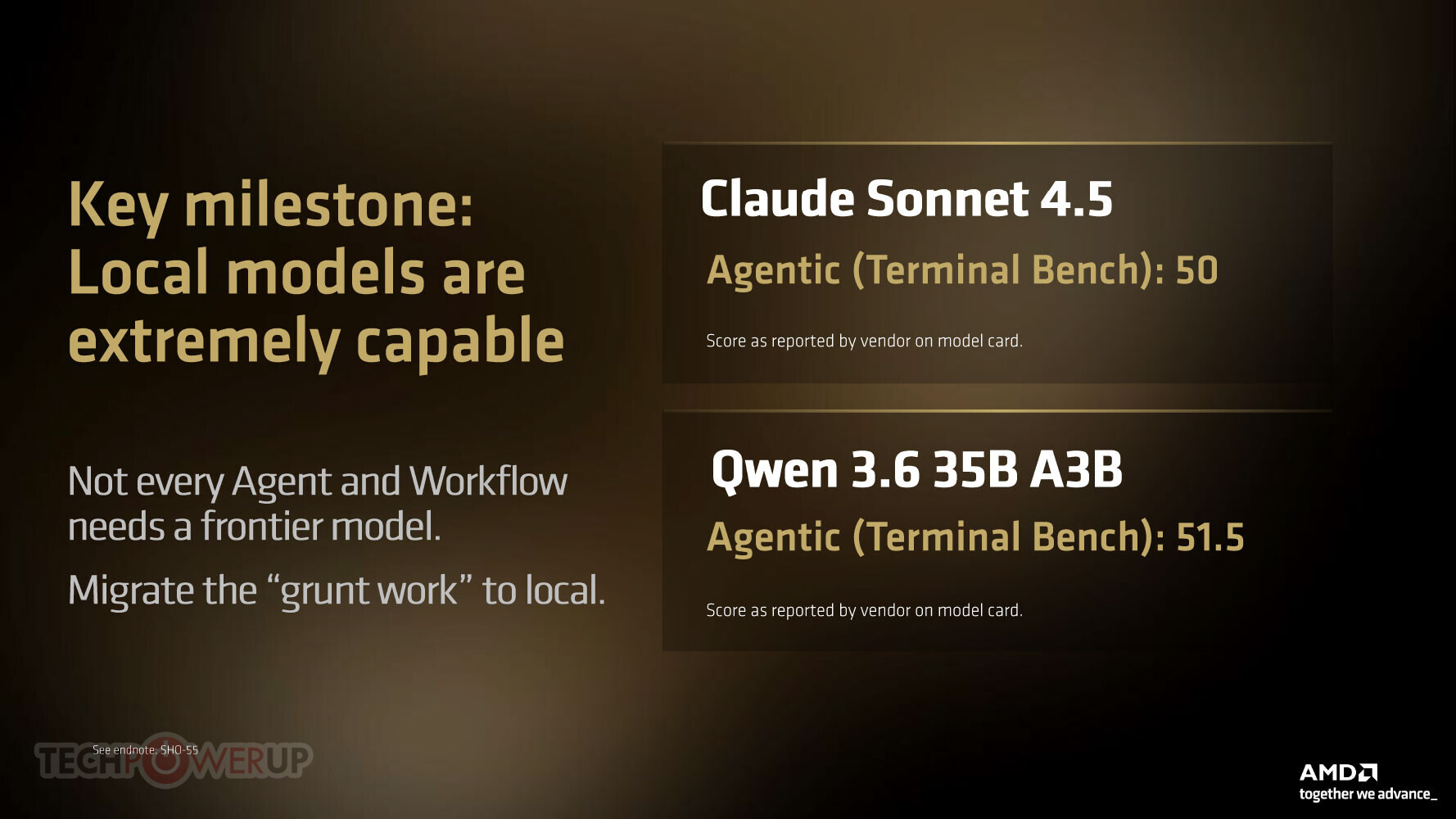
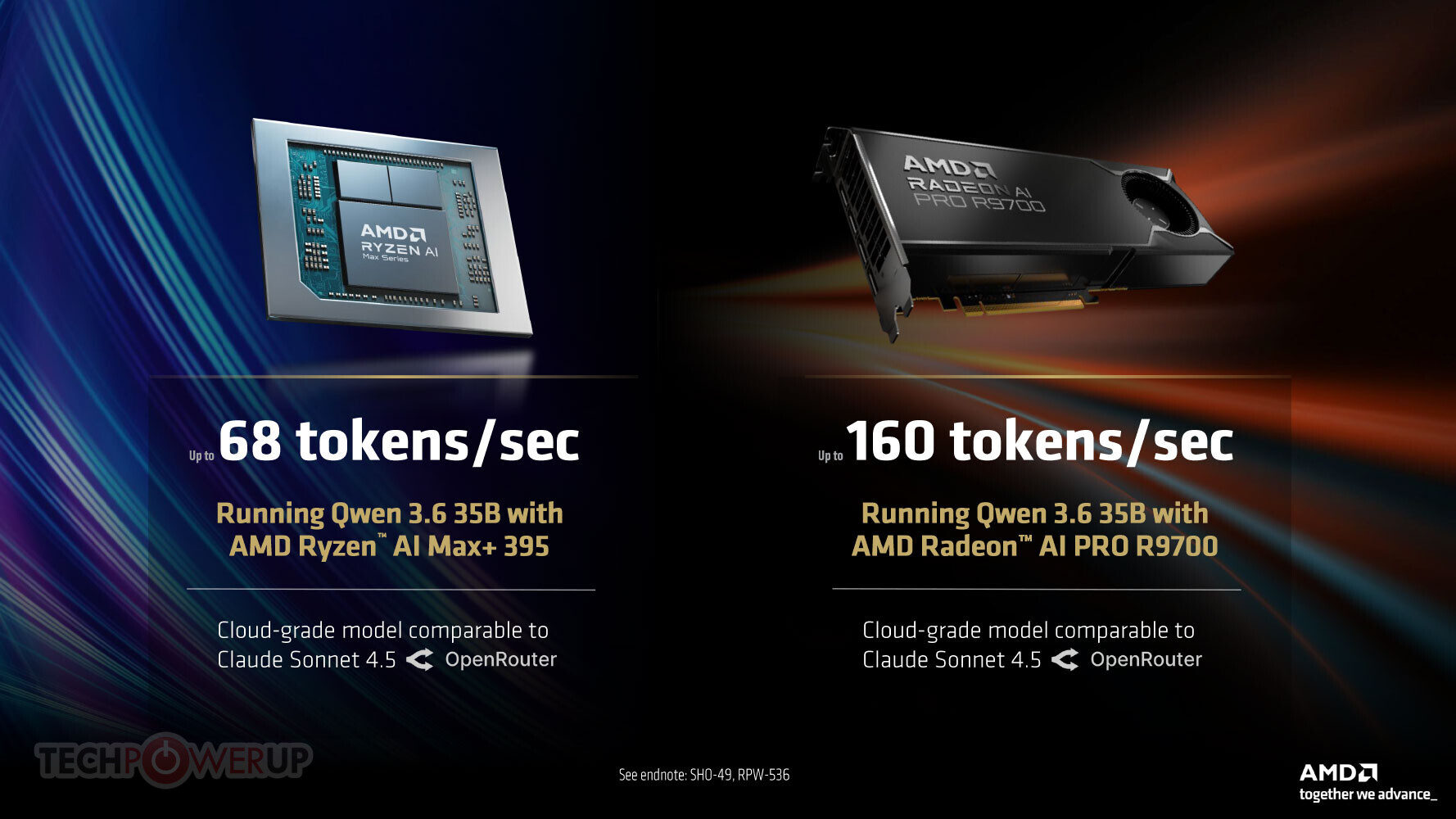
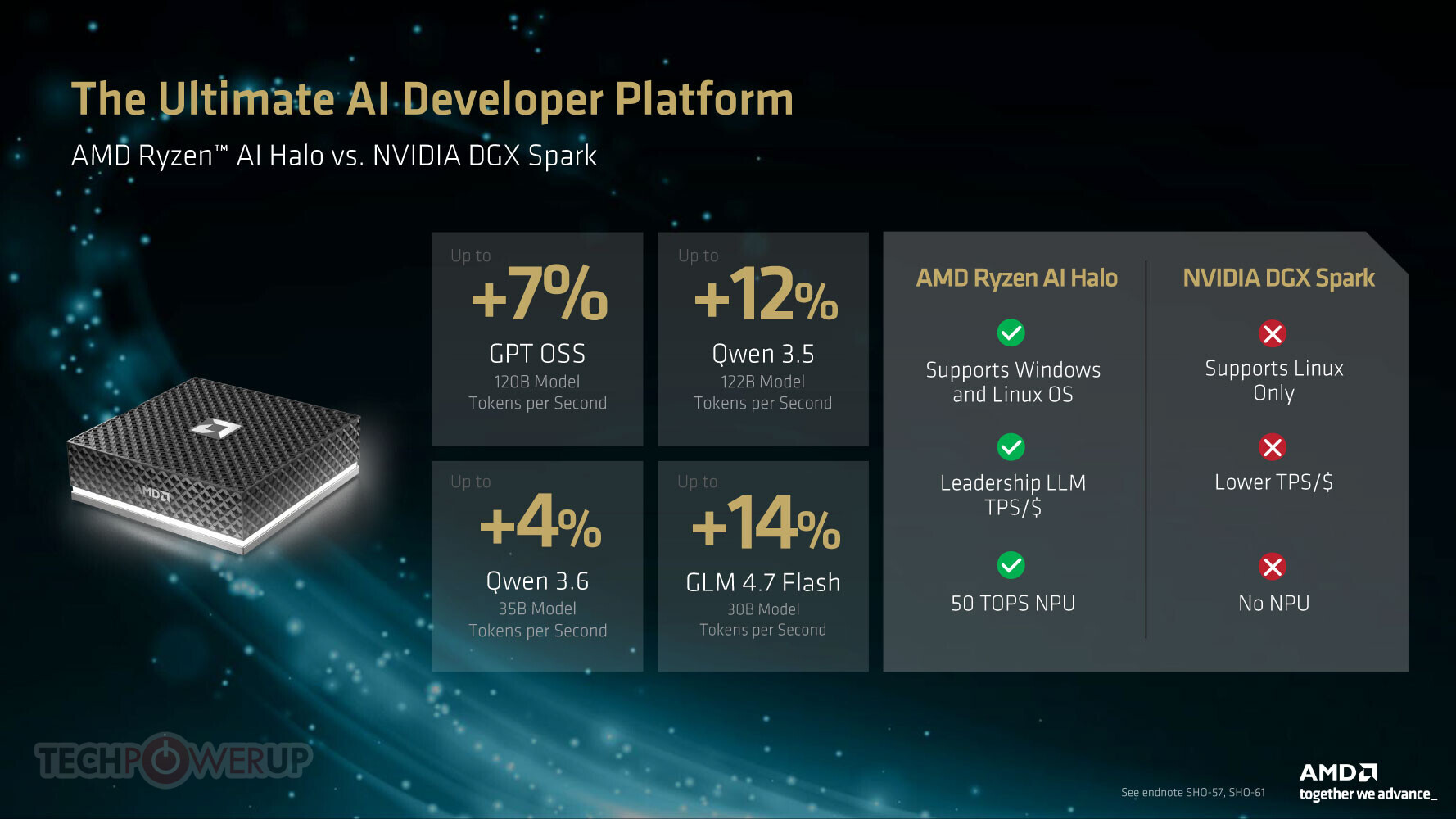
AMD has provided benchmark comparisons highlighting the Ryzen AI Halo’s performance advantages over its main competitors. Against the NVIDIA DGX Spark, the Ryzen AI Halo delivers up to 7% more tokens per second on the GPT OSS 120B model and up to 12% more on the Qwen 3.5 122B model. Even in less memory-intensive scenarios, such as the Qwen 3.6 35B and GLM 4.7 Flash 30B models, the Ryzen AI Halo demonstrates 4% and 14% faster performance, respectively.
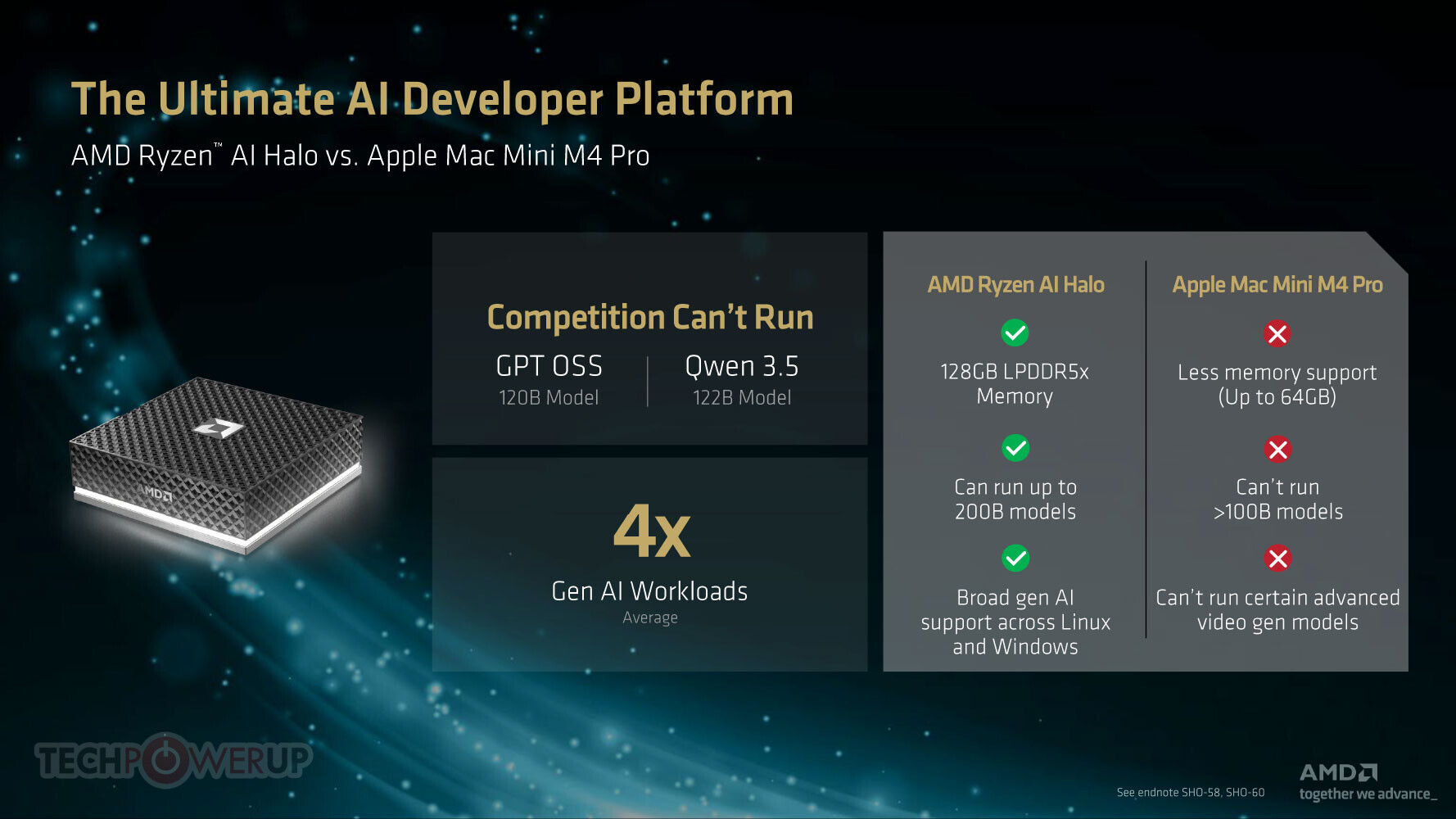
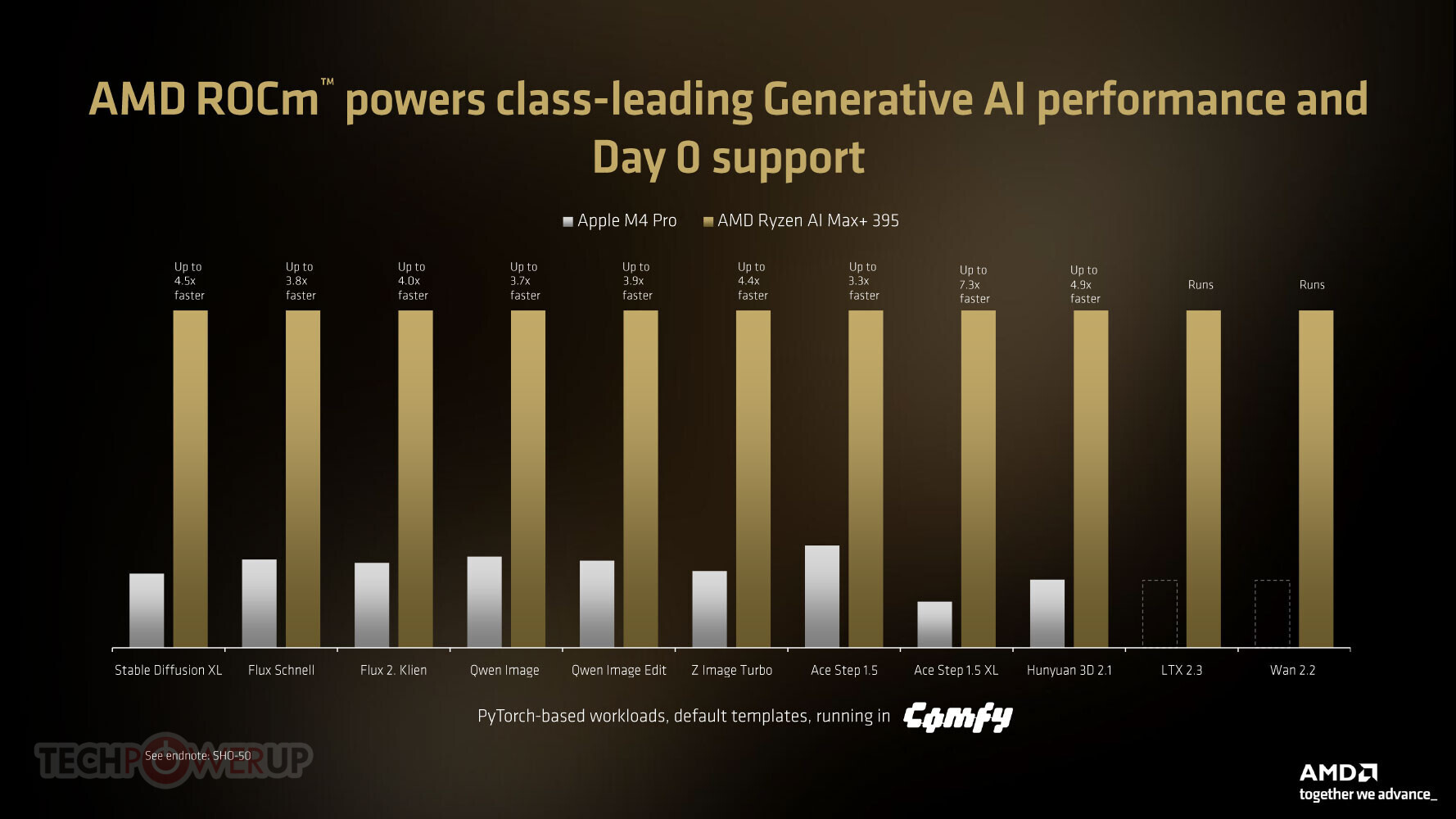
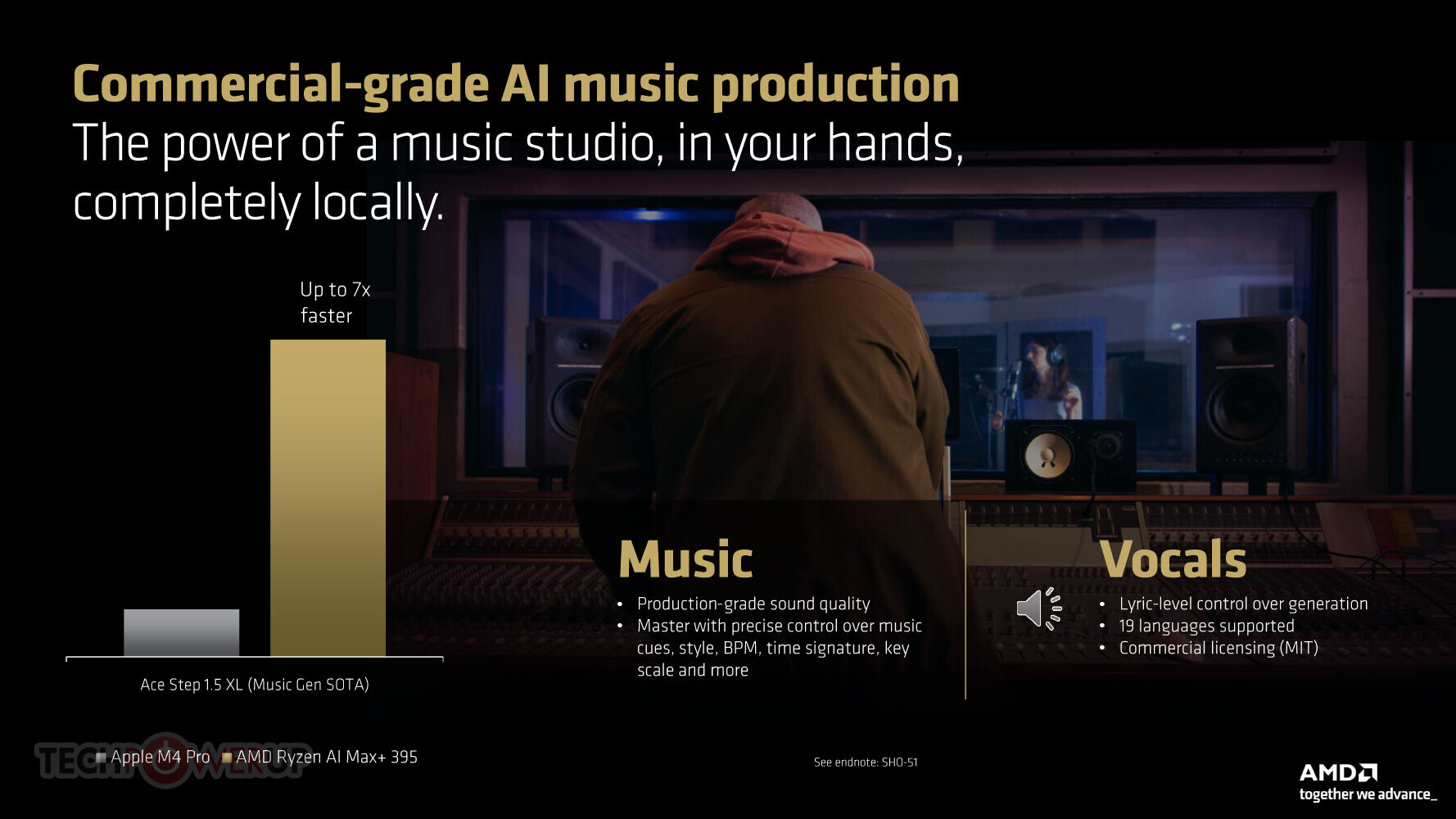
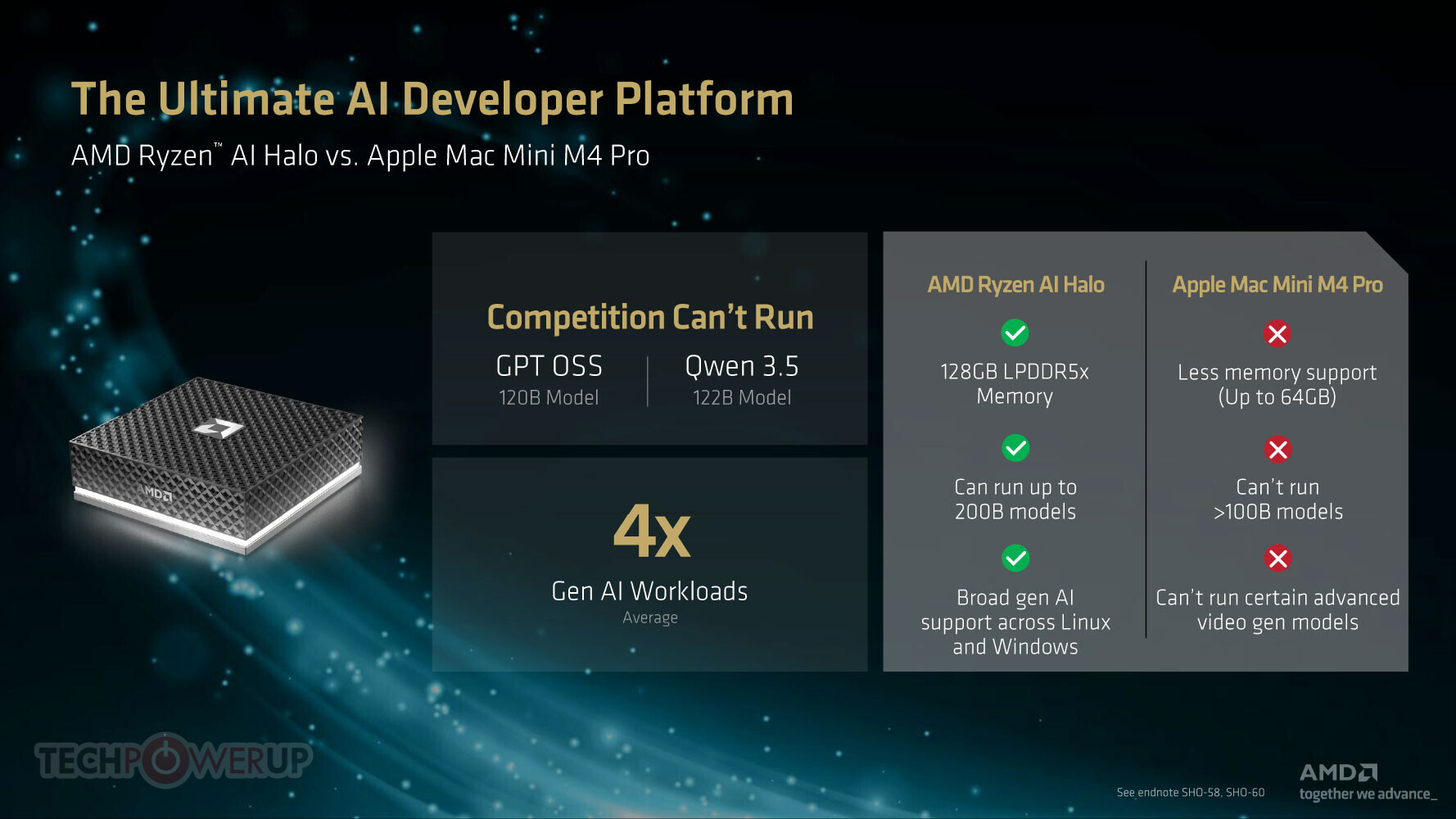
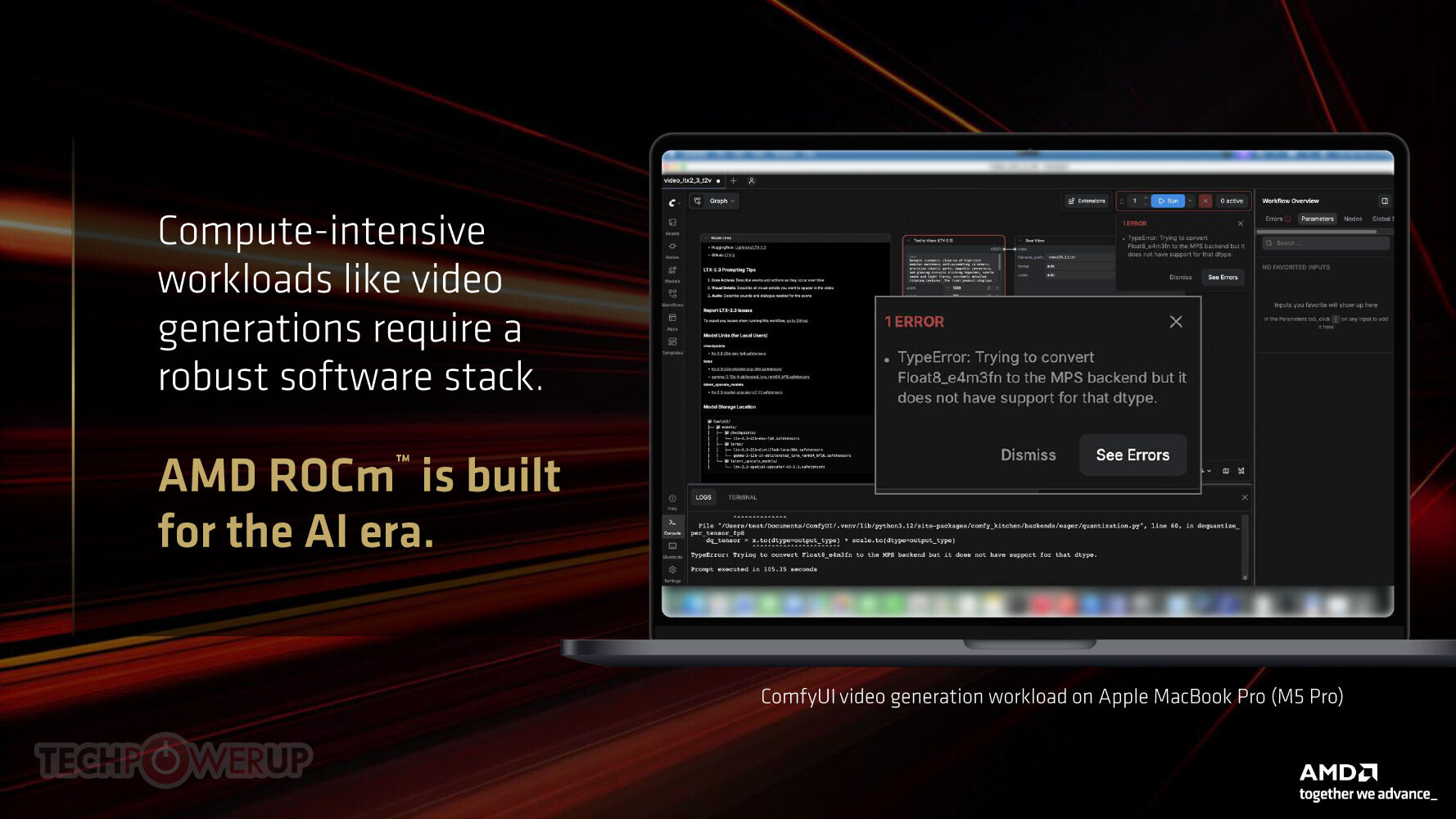
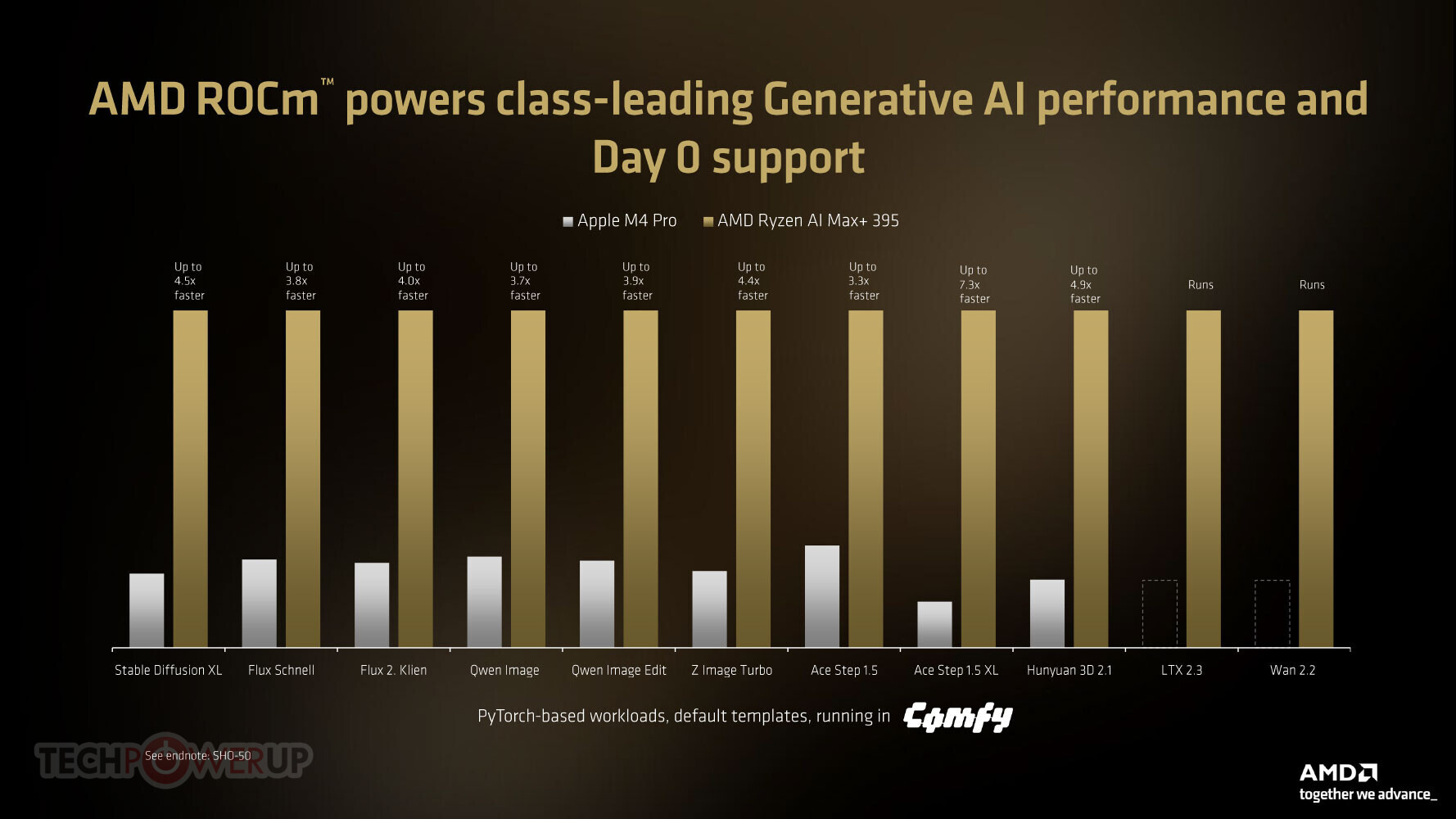
When compared to a fully configured Apple Mac Mini with M4 Pro, the Ryzen AI Halo’s 128 GB memory allows it to run large models like GPT OSS 120B and Qwen 3.5 122B, which are not possible on the Mac Mini’s 64 GB maximum. For generative AI workloads, the Ryzen AI Halo achieves an average 4x performance gain, and it outpaces the Mac Mini in advanced generative AI tasks.
Cost Efficiency for AI Content Creation
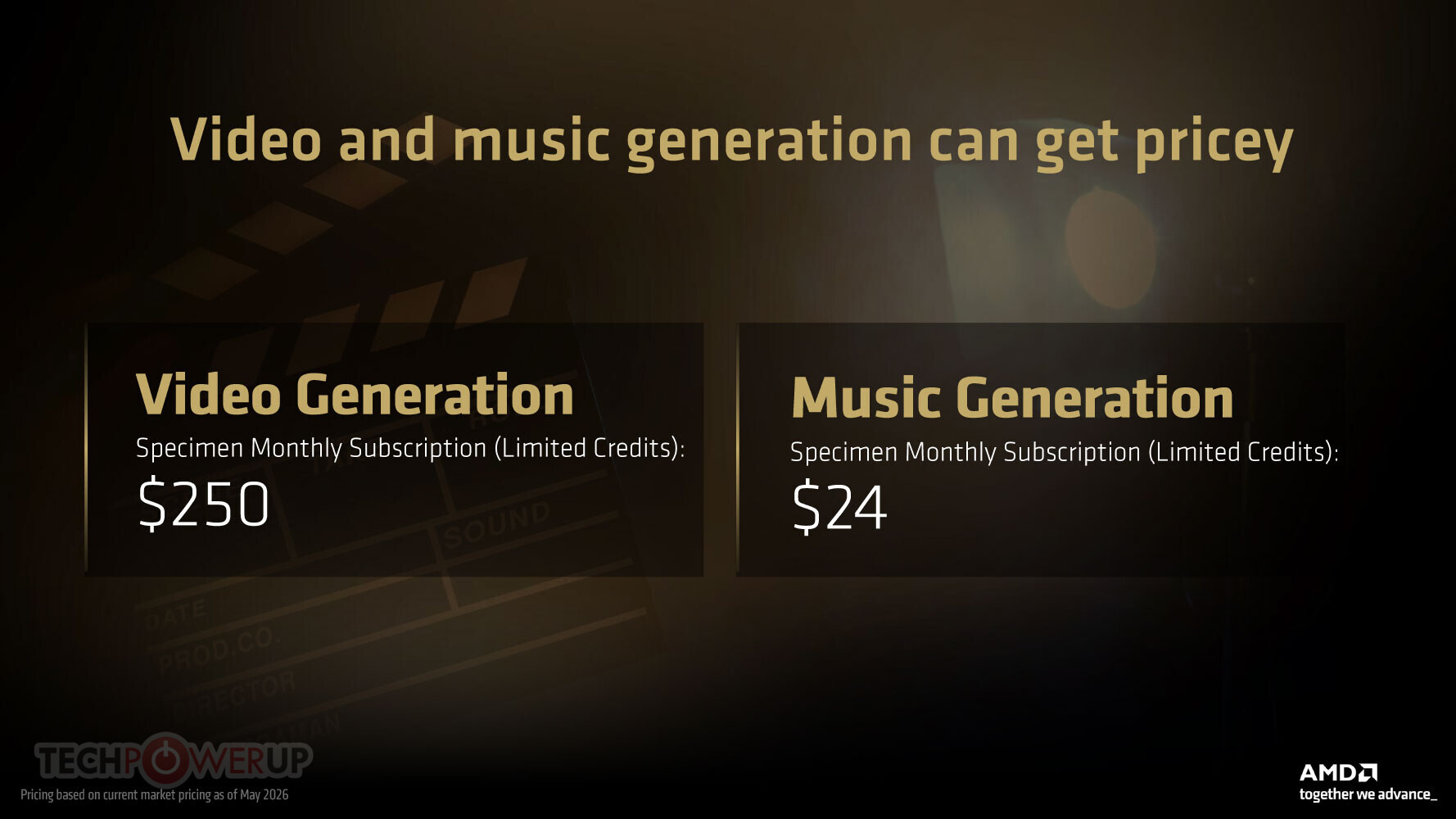
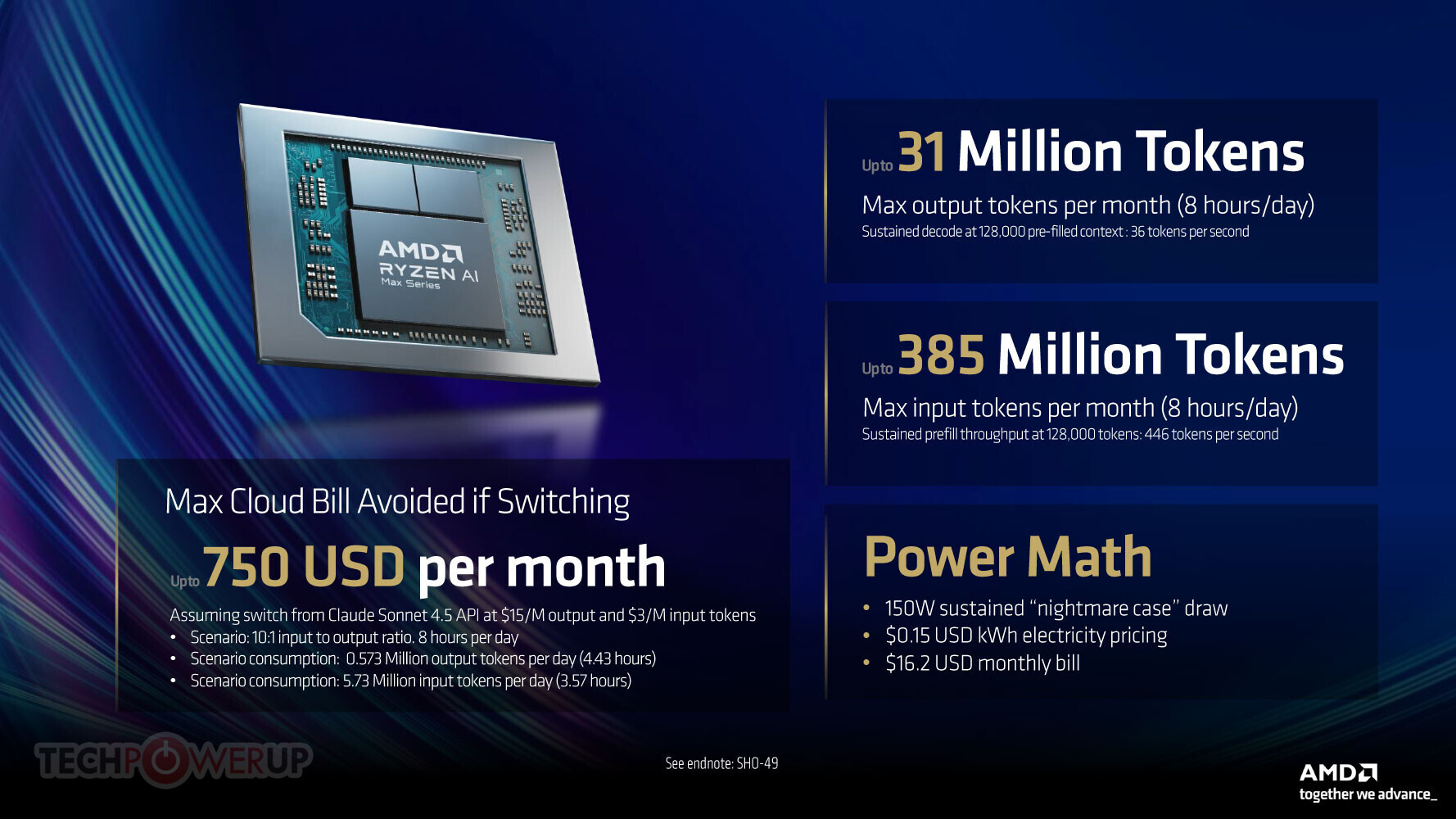
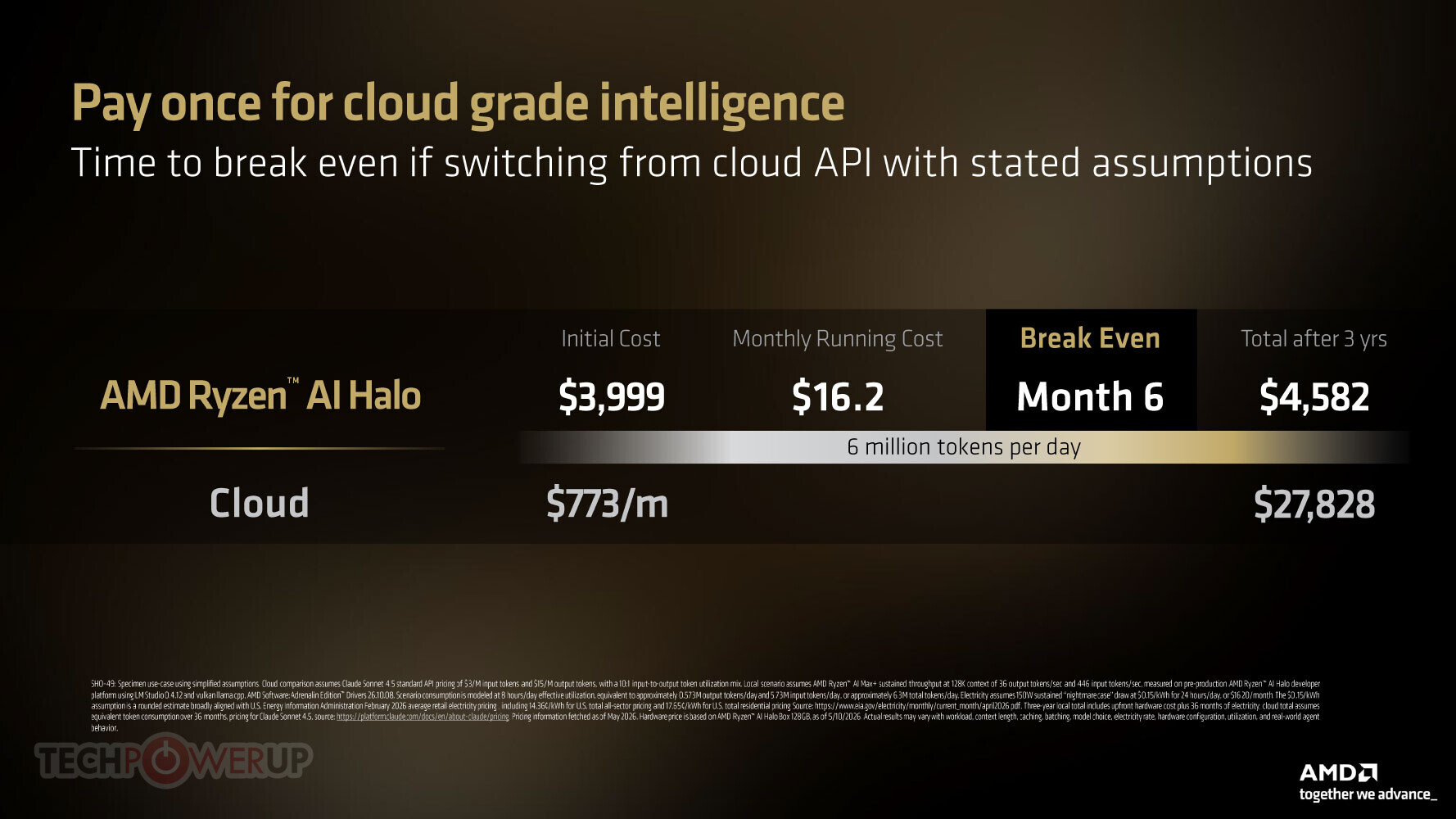
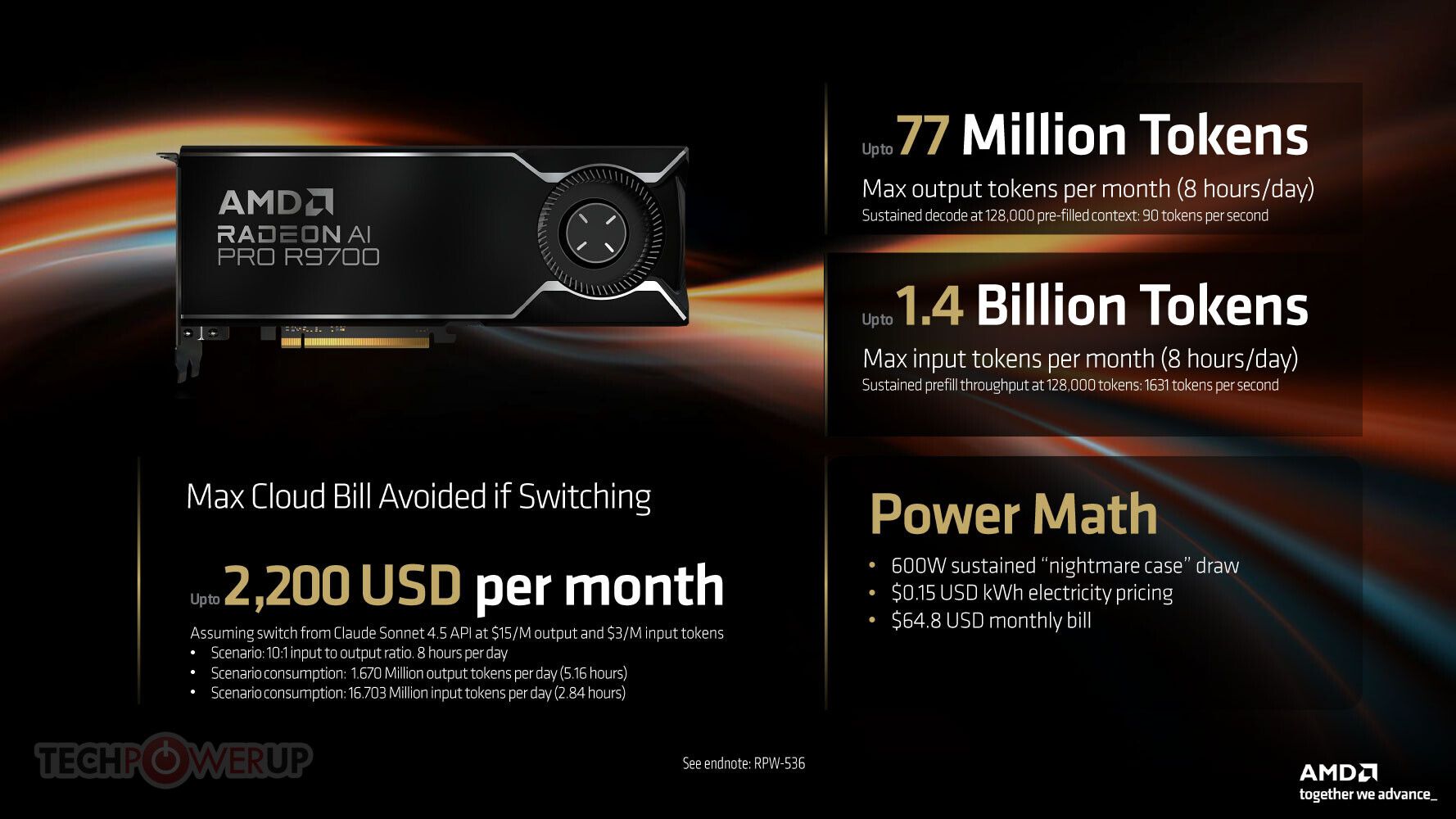
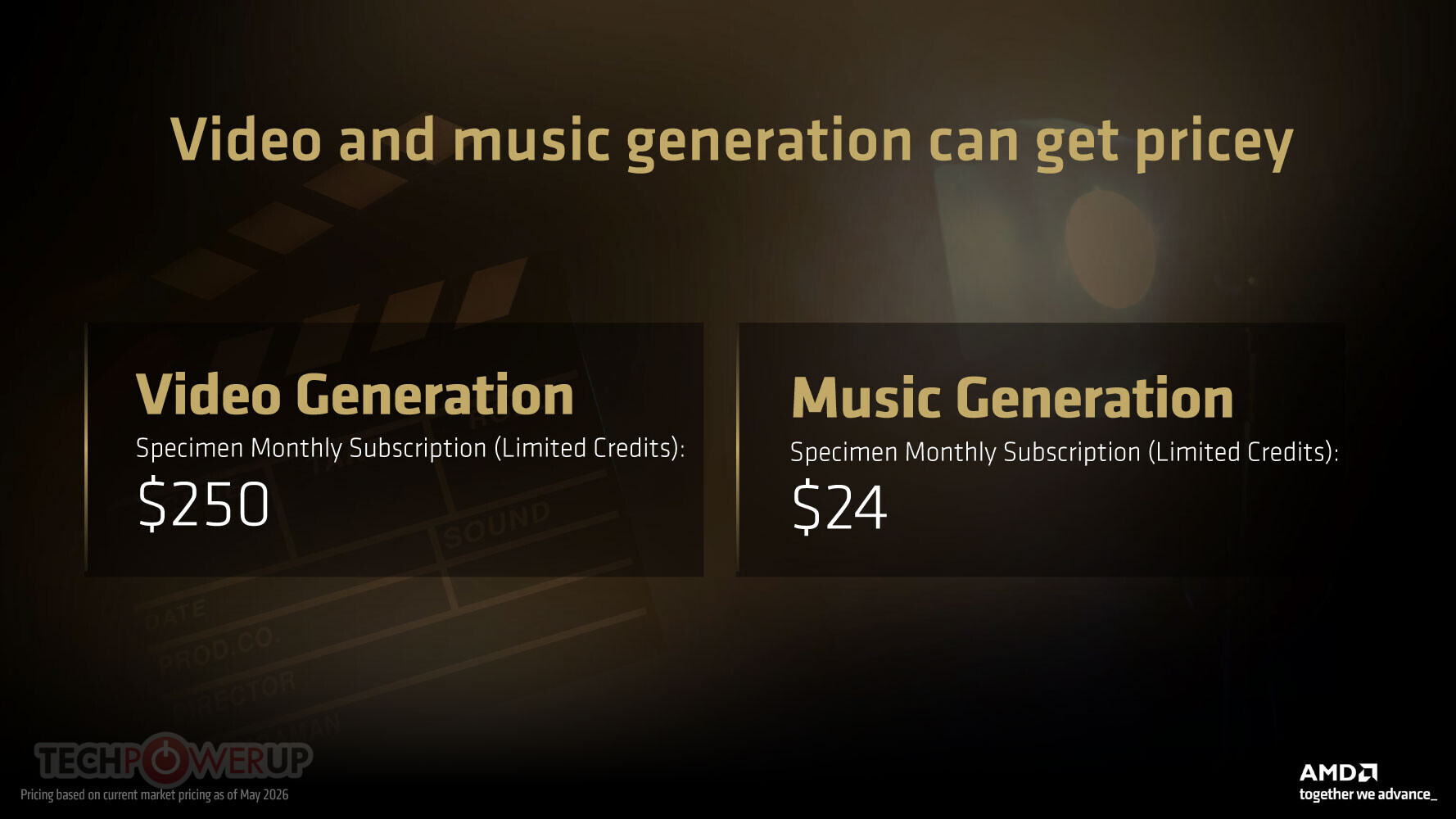
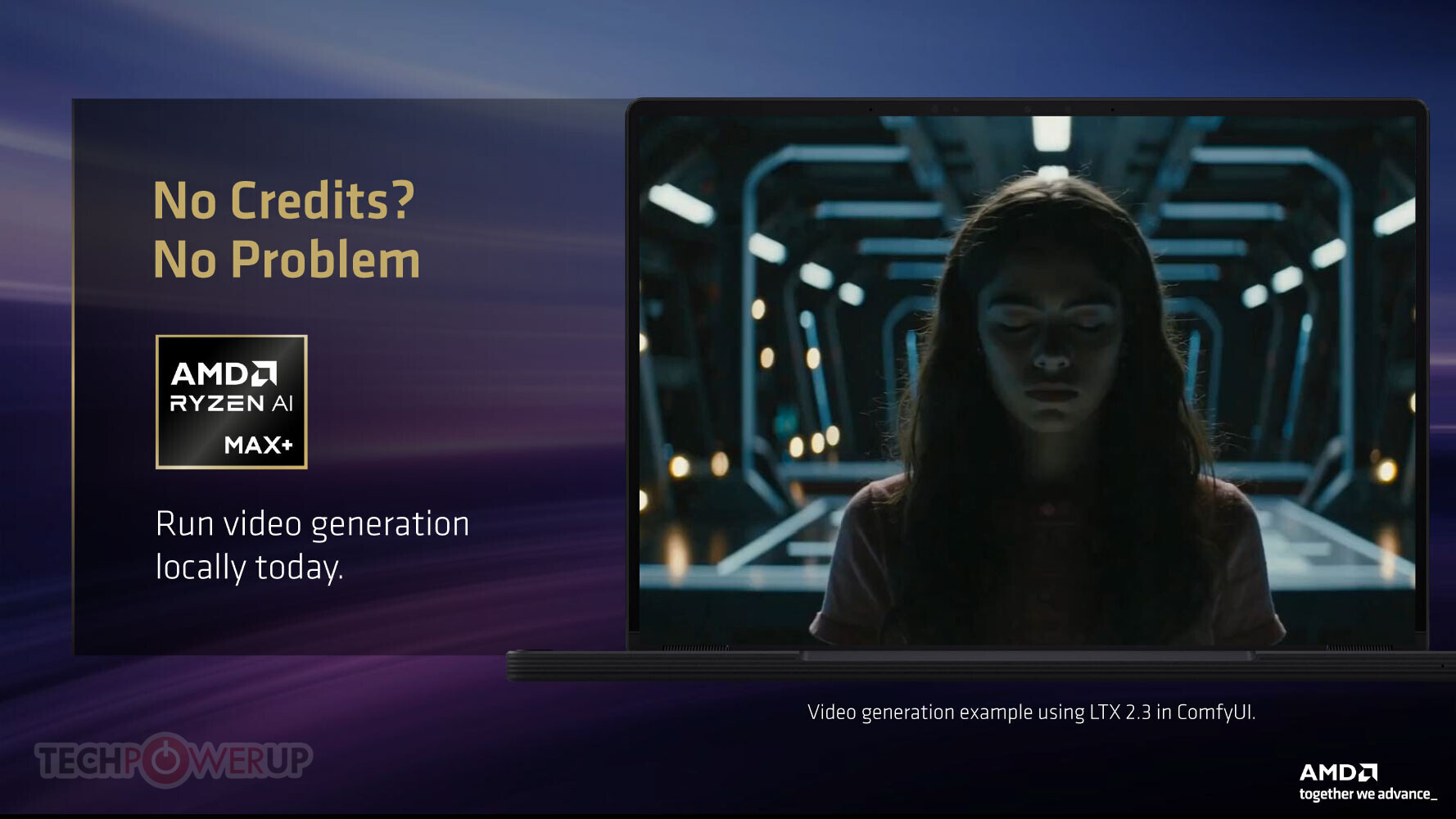
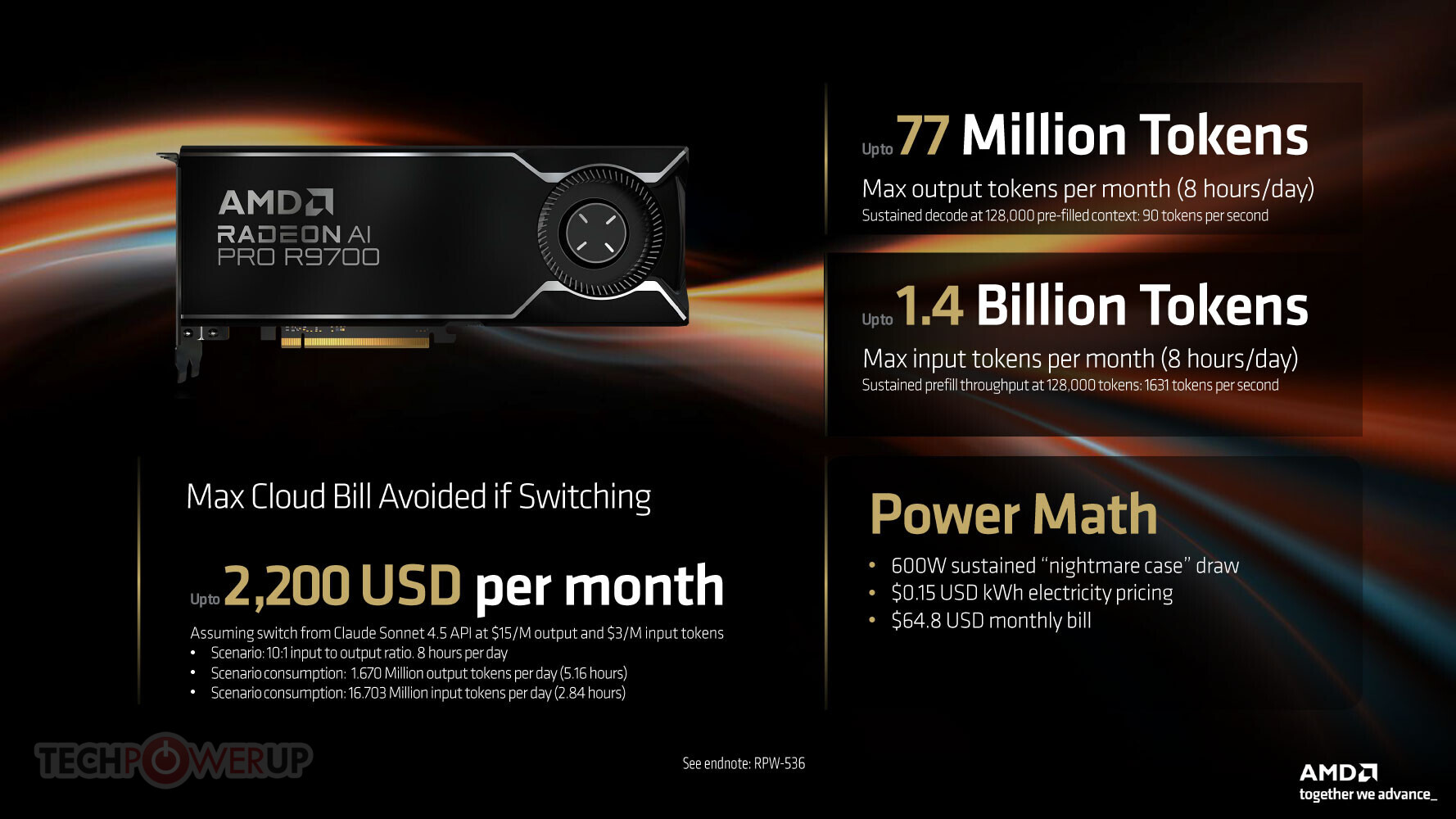
AMD positions the Ryzen AI Halo as a cost-effective alternative to cloud-based AI services. For example, online video generation models can cost around $250 per month with limited usage credits, while music generation models may cost $24 per month. With a one-time investment of $3,999, AMD estimates that users can recover the cost of the Ryzen AI Halo in approximately 16 months, all while enjoying unlimited usage and full control over their AI workloads.