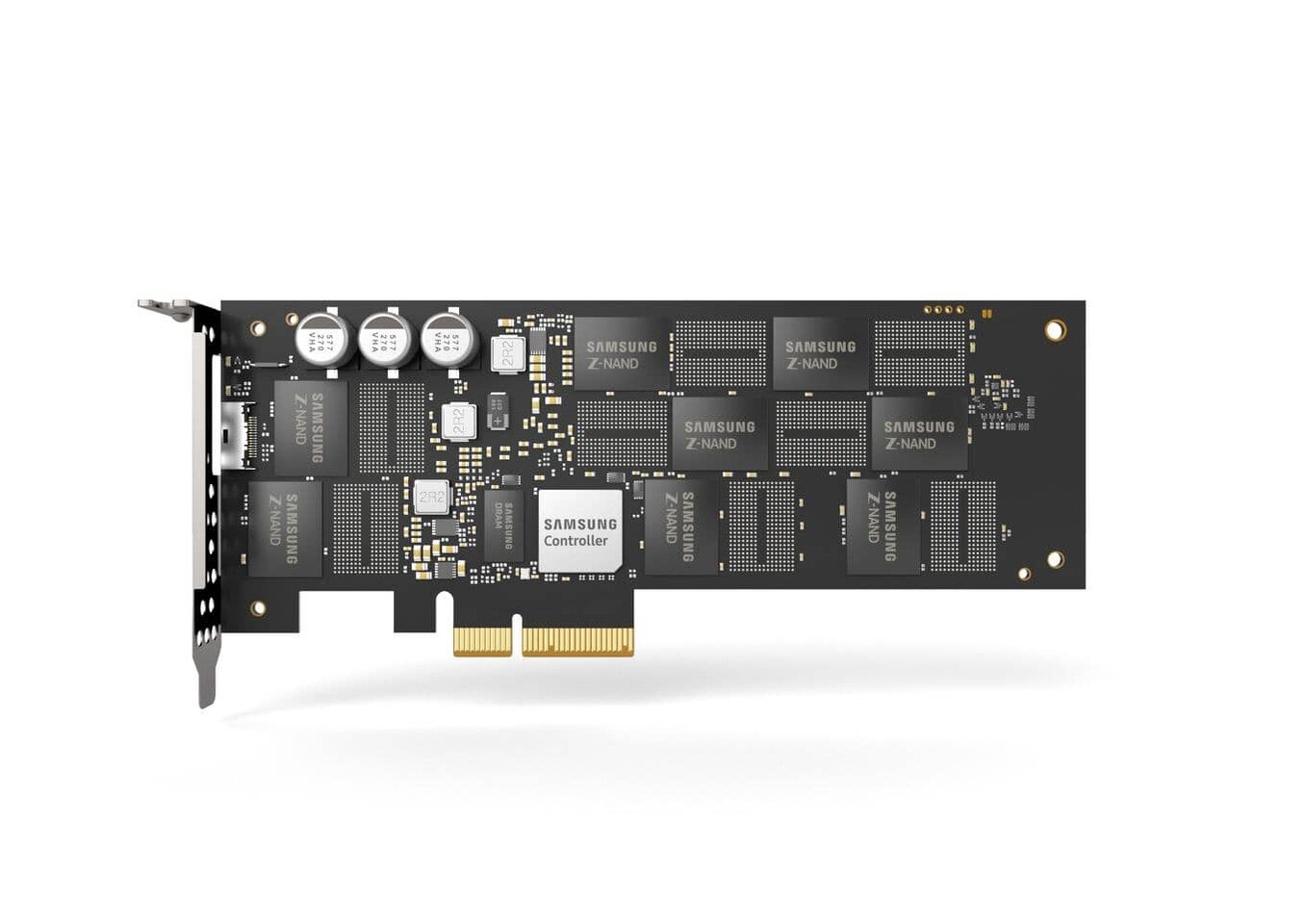
Samsung is gearing up to reintroduce its Z-NAND high-performance flash technology, positioning it as a quicker and more energy-efficient alternative for AI workloads that struggle with the gap between memory and mass storage. The company asserts that the new Z-NAND can deliver up to 15 times the peak performance of traditional NAND while cutting power consumption by around 80%. The announcement also unveiled a method for GPUs or GPU-based AI accelerators to directly access Z-NAND, a concept akin to DirectStorage in gaming but customized for transferring large model data between accelerators and persistent media. If proven and implemented in actual systems, these enhancements would create a persistent storage tier that mimics fast memory more closely for specific AI tasks.
However, these claims raise significant questions as Samsung has not released detailed benchmarks or clear definitions of the performance metrics involved. Historically, Z-NAND has shown lower access latency and strong IOPS, but only modest improvements in raw storage density. Its adoption has been limited due to high costs. Intel's 3DXPoint encountered similar challenges and was discontinued despite its advantages in latency, low queue depth performance, and durability. Meanwhile, competitors are exploring different avenues, with Kioxia promoting XL-FLASH for very high IOPS and industry groups developing High Bandwidth Flash to enhance throughput. The growing demand for faster storage driven by AI makes the timing more favorable now. However, the actual market impact will rely on verifiable benchmarks, competitive pricing, and ecosystem support, including software integration and accelerator compatibility. If Samsung can meet these criteria, Z-NAND could carve out a niche in AI infrastructure, but its adoption will hinge on tangible results rather than marketing claims.